S**t My Boyfriend Says – The Sitcom

There’s something I’ve been feeling a bit bad about. I think I may have turned my boyfriend into an imaginary character. I mean, he still exists as a real person – I know this because he is actually there when I wake up, unlike that sexy Napoleon I dream about sometimes. But I think he is also now a character in a sitcom I might write one day. A sort of heightened, nerdy version of his own self.

For some time now I have been jotting down his sayings. Every time he comes out with something funny or odd I write it down. I only first considered it might be a strange thing to do the other day when I paused him mid-flow like a DVD so I could jot down something he’d just said and then laughingly read old bits out to him like I was reading him extracts from a book I love: “My Dad and I picked up some budgerigars in that lay-by once.” And “How are you? How’s the dimple between your nose and your top lip? What’s that called – your fulcrum? How’s that?” And “I think I got caught speeding tonight. If I get three points on my license and a hundred quid fine I’ll probably take it out on you sexually.”

The funny thing is, he couldn’t even remember saying any of them, and there I was telling him he had definitely said them and qualifying why they were funny. I felt like I was the weirdo. Even though he had been the one to say: “The last thing you need when you’re doing your make-up is a Charles Manson lookalike flitting around your shoulder like a phantom.” And “Baby, we’re not going to fall out over the reinterpretation of Sherlock Holmes, are we?” And “I’d never had a tomato til I was 19. Then I had a cherry tomato and was hooked.”

Most of the time I am able to jot it down subtly without him knowing, but every now and then I have to ask him to repeat what he’s just said, and let on that I want to steal it. “Capture its brilliance” is how I word it, but I think he knows me well enough to know my magpie brain is thieving. I can’t bring myself to ask if he minds just in case he says ‘yes’ and I have to stop.

I’d miss stuff like this:
“I don’t know too much about William II except he was killed in a forest by an arrow. But you’re not seriously telling me it was a hunting accident – ‘Oh. I’ve accidentally killed the King of England.’ – Suspect.” …Ten minutes later: “It couldn’t have been a hunting accident. It’s bullshit.”

I’d forget the throwaway lines: “I fancy some Danish prog rock. It’s not very chilled, so you better adjust your nutsack.”
And “If you ever want to break up with me, make me tea in this mug. Something about its ergonomics makes me violent.”
And (to a hole in the wall): “Sorry. For a moment I thought that was a mirror and I was invisible.”

I worry for our future. I can handle the guilt of stealing his essence. I can handle him thinking I’m weird for loving his weirdness. But what if I ever wrote something that was only good because his lines were in it? What if I made money out of him that should by rights be his? How would we sort that mess out?

Hmm. Maybe I should get him to sign something waiving his rights to his own words; blindside him with a nice dessert or something…

I certainly won’t make him tea in the wrong mug til I’ve got a whole series-worth out of him.

20130827-094512.jpg

Kirstie Allsopp & the Charity Shop Clock Tease

I knew I’d gone too far. But it was all Kirstie Allsopp’s fault. I had sworn at an old lady and it was all because of this wave of ‘let’s fill our houses with stuff that costs under a fiver and live like musty kings’ that’s taking the nation by mothbally storm.

Permit me to set the scene…
British Heart Foundation shop counter, afternoon.
Weather: UnBritishly Sunny.
Mood: Effervescent/Hungry.
Boobs: Sweaty.

I had been drawn in by two 1930s style champagne coupes that looked like they belonged in a Poirot villain’s hand. Reassuring myself it was still a valid means of payment, I counted out all the annoying coppers that were turning my purse into a deadly weapon. (I wouldn’t annoy the Tesco’s lot by doing this. They are very short-tempered and, on occasion, violent.)

What turned this otherwise simple transaction into a potential charity shop showdown was the clock. The 1960s clock that flirted with me using its off-beat tick and tarnished slattern sheen. It was shaped like the shard, if the shard had turned up for a fancy dress party as a sixties clock. It had an air of “I watched the entire Conservative cabinet of ’63 have it off with a stripper above a Soho pub and have maintained my silence until now.” That kind of clock. I paused a while, trying to decide if it was naff or not. It’s hard to tell good naff from bad naff and you don’t want to get it wrong in case Kirstie Allsopp gets cross with you.

The pricetag fluttered at me like a can-can dancer’s skirt. A quid. That cheap little clock teaser. I thwacked it on the counter. Kirstie would definitely snap this up, even if its frenetic tick-tock did bring on an epileptic fit. Another old lady sidled up and raised what was presumably once her eyebrows. She spoke to her colleague, who looked like a Valerie, like I didn’t exist.

“This isn’t a pound. It works for a start. Must’ve switched the labels round.”

I stared at her. I suppose I was waiting for her to look at me and realise her cynical summation of my character had been disgustingly unfair and to apologise. She stared stubbornly at the clock. ‘Valerie’ blinked at me.

“I’m sorry?” I said. (Feebly. I’m no granny-basher.)

“This isn’t the right tag. This has been swapped. This should be at least ten pounds.”

I stayed limp and silent, but my eyes, pools of fiery chaos, said this “Well, I didn’t write it, did I? Your colleague just saw me pick it up. There was no time for label fraud.”

“Oh.” (I actually said) “That… was what was on there.”

“Hmm.” She said, no doubt rendered silent by the scary lasers in my eyes.

Her suspicious arrogance and her refusal to look at me made me unleash the beast.

“DON’T YOU *insert F word* IMPLY I AM TRYING TO DIDDLE THE *insert F word* AILING HEARTS OF BRITAIN OUT OF NINE *insert F word* POXY POUNDS, YOU MISERABLE, MEAN OLD *C word shuffle* CRONE.”

Obviously, this torrent of profanity only took place in my head. What I actually said was
“Ok. I’ll leave it then. Thanks.” And left.

Why was this violent fracas all Kirstie Allsopp’s fault? Well, someone’s got to take the blame for OAP volunteers having to bolster themselves against hardened pricetag fiddlers (NOT THAT I AM ONE), and it might as well be the bird telling the nation that everything can be had for a song and that our homes should glint with the scrubbed up rubble of the Blitz.

Charities shops used to be a place you could sweep slowly around pondering life as you bonded with an old egg whisk. Now, thanks to these ‘I wear an old tea cosy on my head and gave birth to Barney in a refurbished skip’ programmes, if you snooze you lose. If you don’t whip around with ninja skills, you will get bustled into the Loser corner – into the basket of old brown bras and the 100 piece Country Cottage puzzle with 99 pieces missing. And if you even attempt to lay one finger on that old Singer sewing machine before the stay-at-home mum who’s channelling her disenchantment with life into quilting, you will end up with some broken Edwardian bellows up your arse. This shit is turning ugly. A child in a buggy wails on cue to optimise haggling conditions for its thrifty mother. Two pearl-wearing passive-aggressives tussle faux-laughingly over a suspected Clarice Cliff pepperpot. A strategically spilt takeaway de-caff mochaccino on the one remaining clean bit of carpet in Scope befuddles some poor volunteer who forgot to take her HRT into letting an early Turner go for a handful of change and half a rich tea biscuit. Soon there’ll be covert CCTV cameras in carriage clocks and mace stowed in old marjoram jars. Overnight security to man the midnight toot drop-offs. The washing machines out back that once produced that strange sicky-powder charity shop smell will be scrapped to make space for interrogation rooms. The old brown bras will be commandeered for assailing thieves; former cross-stitch champs will be strapped sobbing to chipped one-armed mannequins in the window til the police arrive. This isn’t ‘make do and mend’ anymore. This is ‘make my day, punk. This junk is so on trend.’

I can’t blame the oldies for all that. They’re old. They lived through the blitz the first time around. They had to eat powdered egg for fuck’s sake. They don’t give a shit about old shit anymore – they just want some flat-pack Ikea crap that smells new. Solid wood bores them. They want the uncertainty of MDF; it reminds them they’re alive.
No, I couldn’t flip them the bird – it wouldn’t be decent.
And they’d probably punch me.

20130812-110145.jpg

Success & Suicide – The Black Business of Acting

Since moustachioed Russian dude Constantin Stanislavski wrote in ‘An Actor Prepares’ of slathering chocolate on his face so that he could more fully embody the role of Othello, actors have felt encouraged to take themselves and their work very seriously. I mean, they must have taken it seriously before – you sort of have to be serious about the willing madness that is getting up and asking people to watch you do anything, let alone expecting them to think you’re good at it – but Stan really gave them the sort of visceral actor’s language to explain to non-actors how hard and serious it all is.

For most people with the burning ambition acting never amounts to more than an unpaid hobby, but for a ‘lucky’ few acting is a profession. It’s been a profession for thousands of years. The Greeks, if you embrace the more colourful imagery, had to shout to be heard above the din of mass vomiting and fornication in the amphitheatres, Shakespeare’s all-male players spittled their falsetto over the groundlings while pretending to be women, and Catherine Tate was paid to be allowed to pretend to be an actress – swaggering on stage with actual actor David Tennant and gurning over some of the most beautiful words ever written.

It’s a baffling business. But then so is oil, and the stock market, and prostitution. And teaching.

I very briefly wanted to go to drama school once. Until I studied Stanislavski and realised I had none of the crazy drive you need to be an actor. More than that, I just didn’t want to whack chocolate on my face and try to make words sound like they weren’t written first. I discovered I would much rather write the words. So I did a writing degree. I don’t quite know how I found my way back to making acting one of my professions, especially the one from which I’ve earned the most. It’s fun, but I don’t take it seriously. I think of the words first, and then the considerations of performance are a sort of by-product in bringing the words to life. Perhaps it’s merely a more healthy thing for my psychology to attach itself to than the full-blown desire to ‘act’ that a lot of my good actor friends have.

My reticence to connect with acting over writing – writing being something that can always be yours, and acting something that is only ever yours while someone is happy to give it to you – is partly why I was so moved by the death of the actor Paul Bhattacharjee recently. The fact he had likely committed suicide as a result of being made bankrupt made me sad not only that so many people take their lives because of the ugliness of money, but sad that an actor with regular work, in high status productions like Bond films and west-end plays, had come to find himself in such a pickle. If the successful ones are struggling to make ends meet, how on earth are the less successful ones getting by? If the seemingly happy ones ain’t happy, how are the other poor bastards doing? (And is there more to the occasionally-tickled issue of actors likely having something a bit wrong with them in the first place?)

Did Paul Bhattacharjee know when he was taking his bow as the highly desired male role of Benedick in the RSC production of Much Ado last year that a mere twelve months later he would literally find himself at rock bottom? Was it pride that drove him to it? The dichotomy between the outward appearance of the carefree, glamorous life of a respected working actor and the shame of a man who finds himself discredited and reduced? Did he feel like a fool? It seems a common thing for those who stumble their way to bankruptcy to be less worried about where the next few pennies are coming from, about the sudden lack of things, than they are about how they might look to people who find out. The aesthetics of debt. Pride. It was certainly a major factor in my father’s suicide.

This is naturally just my reflection on possibilities. I know nothing of Paul Battacharjee’s life. Tales of debt and suicide strike their own chords in me; the reverberations may well be wrong.

Battacharjee’s death has inspired many responses from other actors, those that knew him in life and those who did not; written ruminations not just about the sadness of his end, but about the precarious world of acting itself. His suicide has inspired actors to speak out; their own words, their own stories. Even those who are happy to admit that it can be a profession for idiots, eternal children and egotists, and that while in the employ of a production you are one of the luckiest fools on earth, even those are saying it’s fucking hard to be an actor and that to set about doing it with any focus on longevity you have to be a bit of a masochist.

I suppose it would be easy for non-actors to think that actors moaning about how ‘tough’ it is need to get a bloody grip because they could be swilling their hands about in sewage or sweeping an offal floor for a living.

But the truth is, all living is hard. The thing that demands the greater proportion of our waking time – our job, whatever that may be – is hard at some point. Humans are naturally set to struggle with it. Existing is a serious business. We weren’t born to do jobs – we’ve made them up as we go along out of necessity; supply and demand burgeoning in tandem with our precocious, vainglorious evolution. And time niggles us like a cattle-prod reminder that we haven’t got long left. That is why actors think acting is serious. That is why writers think writing is serious. Why shopkeepers and bankers and nail technicians think what they do is serious. Anything to which we give our time, our lives, and perhaps even more particularly our passion, is serious. Because we don’t get much time and it goes bloody quickly and even the most hopeful of us don’t know if we’re given any more at the end, and some of us are even driven to cut it short.

Being human, more so than a member of a man-made profession, is the hardest part. And a role for which we are never really amply prepared.

20130805-105852.jpg

Poor George

I feel a bit sorry for George. The royal sprog has barely opened his eyes to the light of existence and already is being heckled by the world and his dog. In the first week of being welcomed into immeasurable privilege and all its daunting opposites, things he has no control over are already being scrutinised – even the small stuff. Namely, his name.

By George, I have read reams of rot spouted about the choice of this name. Which I love, incidentally. There are far more modern names being dragged into common useage that leave my skin bristling with that clamminess you get before you puke. I’ll refrain from listing in case I get hate mail from a disgruntled Lambrusco. (Sorry – that one popped out.)

When I was floating around my Mum’s amniotic sac her and my Dad used to call me Fred. A twee little lovers’ joke. They wanted a girl, and pondered Charlotte awhile. And Sophie, and Phoebe. And even Georgina. They settled on Sadie.

I have always liked my name. I like the sound. I like the fact it’s not used much. I like the care that went into it. It can make me feel all sorts of things. I am fiercely protective of it if I hear it being bellowed at a naughty child. I can feel close to a stranger if I hear someone reminiscing about their stalwart Glaswegian grandmother Mammy Sadie, who went without shoes for the kids. I can feel young and sassy or like a melancholy Jewish widow, all in the same hour. It seems to suit a lot of aspects of my character. Have I grown to suit the name, or have I changed its connotations in my own mind to suit what I am?

Would my life have been any different if I’d been a Fred, or Charlotte? Georgina, Sophie, or Phoebe?

What life will George have? What will he see and do, and think and feel? How much of it will have anything to do with his name?

There’s a lot tied up with being a royal George. None of us will ever really understand that very particular sort of pressure (and, whatever we think personally or intellectually about monarchy, we should always give them some thought as fellow human beings, or damn our own selves to wilful ignorance and meanness).

I’m not massively pro-monarchy, though I do think the monarchy are vaguely trying to make themselves more relevant to us while no doubt trying to preserve their clan, as is completely natural; no family wants to run itself out of existence – that would be anti nature. My indignance over royal ‘privilege’ only extends to thinking that some monetary cuts could be made, and some creative ideas applied to the use of their assets so they can sustain themselves better independently, rather than using our tax money when so many other needful things are in a ruddy mess. I mostly feel that having them there is quite nice for the country. They’re a feature. Like a cocky stone cherub peeing into a garden pond.

I wonder if our new George will find his way to being his own George, or a variation on the past. Will he be another dreary offshoot on a chart of disheartening history at school, or a man who can define his age with all the qualities we wish for in a king?

Either way, he has quite a weight already on his tiny fontanelle. I sort of hope we’ll be his friend along the way, especially while he’s just a boy. We all need them, whoever we are.

20130729-100357.jpg

Bin-bagging Alan

Right. Let’s do this. Column. Go.

Oh, hi guys. Excuse the ‘tude up there in the first line. I’m having a sort out at home and I’m being a bit brusque because I am Being Efficient and that’s the tone you should have when you are being that, right? I’m wearing my hair in a bun too. Because nothing says ‘I Mean Business’ like a big knot on your head that takes ages to get out because you didn’t brush it first.

Right. Focus.

So, my hallway is currently lined with binbags, which apparently – in the interest of my not falling over the bannister and dying – I now have to go through and see what can actually be ‘thrown away’. Which bits of my collected living that I saw fit to keep a while, perhaps even forever, are now redundant.

It’s quite tough keeping your ‘I Am A Machine’ vibe going when you’re worrying about hurting the feelings of a broken coat hanger, and a festival T-shirt that didn’t even accommodate your left breast let alone the right one as well. What if they figure out they’re on the ‘Defo Chuck’ pile? Can I be responsible for that inanimate emotional fallout?

FOCUS, HASLER.

Anyway. I have a system of sorts. I think. In that the first ‘chuck pile’ doesn’t count. Does it. I mean, it doesn’t, does it. (Note: absence of question marks.) That is merely a pile of maybes lying there waiting for further scrutiny (/lengthy cross-legged musing). I will need to spend at least another five hours quadruple-checking the things I callously lobbed (/placed lovingly piece by piece) out of my Room of Woe – the box room which lives up to its descriptor, storage possibilities, and Pandoran mythology. Which items should definitely be advanced into Pile 2 – the ‘Maybe Definitely Maybes’. And even beyond, in time, after further consideration, to the ‘Absolutely Definitely Think About Throwing Away One Day’ pile.

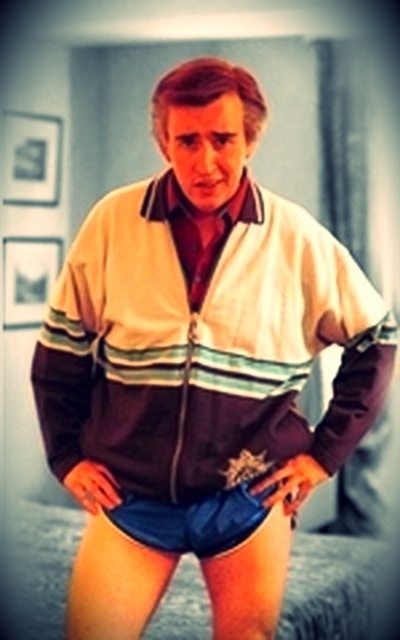
It’s a hazardous job. I just almost frenchied the chin of my life-size cardboard Alan Partridge when a bamboo screen I had forgotten I owned fell on me at an odd angle. Alan stood awkwardly, a bit bent, as I tried and failed to move an old 50s iron that I stole from a theatre in Margate. (Or somewhere less specific. In my defence, it didn’t seem like it was being well looked after there. I am not a thief. I am a rescuer.) Anyway. Alan was a gent and moved the iron for me.

FOCUS HASLER.

I tell you what – just while I pause for tea and to write to you guys and possibly shave the dog – I’m ruddy glad we don’t have to obey health and safety regs in our own homes because my life would get shut down. I’d have men in hard-hats making big black crosses on a clipboard and shaking their heads at me while they wave in a rubbish truck to take me and my life down to the tip. (I love the tip. Have you been? There’s loads of great stuff down there. You should go.)

Pause.

I’ve been thinking. This is a big job.

I might just put it all back and start again when I’ve got more time. I want to do it justice. These inanimate objects that I am in no way attached to deserve it. Good plan, Hasler. Do it another day.

Come on, strange lampshade – come sit on a bookshelf for a bit like I know how to fix you in any way. You pretty, lovely, useless broken thing.

20130722-142227.jpg

The Vagabond Diaries – ‘Clarence Larchsap’

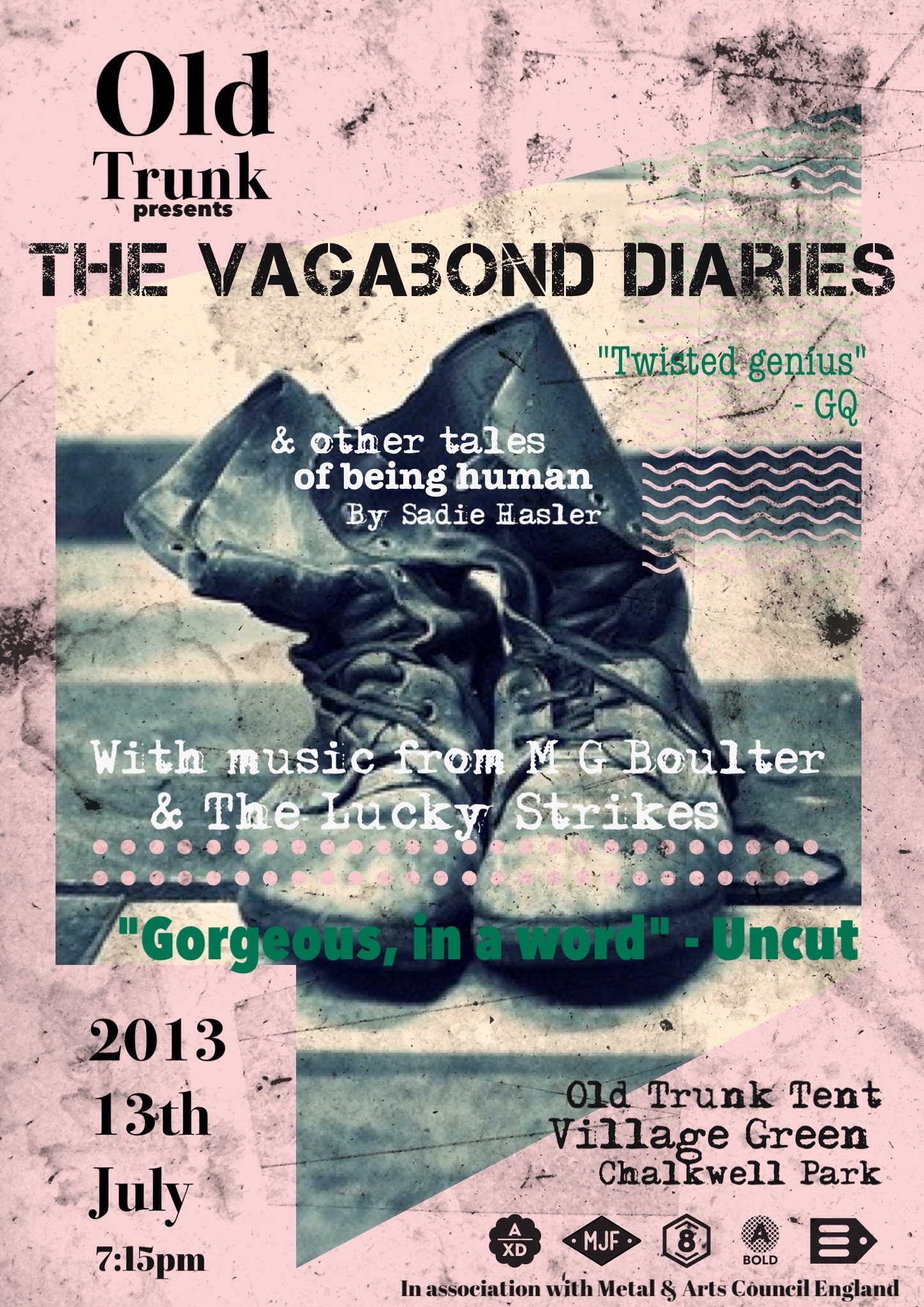
The Vagabond Diaries – stories of being human by Sadie Hasler accompanied live by M G Boulter & The Lucky Strikes – premiered in the Old Trunk theatre at Village Green Festival 2013.

The piece was read by actor David Streames.

Thursday, April 5th, 1922

This is the 47th year of my writing a diary every day. I would say I have written it religiously but there have been days, as we are all like to have, when I have not been all that religious. There have been days, as we are all like to have, when I might say I have written in poor reverence to the lord. I have had bad thoughts, I have cheeked people without their knowing, stolen small and large items according to need or want, have cast my eye too long on a raised skirt far more than a Christian man might, and I have cussed, but have always seen fit to scribble the badness out. My diary has more black lines than words. Some days are just great black lines, and now that I am in my 62nd year I cannot always remember what went there in the first place.

I feel a little like starting again. Writing a new date, that has never yet existed, of telling you, whoever you are – for who do we write to when we write a diary? I do not know – telling you, a you whom I do not know, who I am. If anyone ever knows such a thing.

I would start, I suppose, with my name. I could do that. I can and so I will. My name is Clarence Larchsap. I had a nickname once, but I forget what it was or who saw fit to give it me.

I suppose I might next tell you I was born in a little town in South Carolina. For I was. The name, I suppose, does not matter. Its topographical features, how I travelled around them and what I did within them matters not either. I could inform you of a great many biographical details, as people seem so set on doing, as though telling you things about themselves makes them exist a bit more, but I shall not.

Schooling, love, happy days and friendship, they didn’t last and mean little to me now. Parentage, even, those broken souls who forerun our own blighted journeys, that too has come to mean no more than a quick sigh and is not something I can stretch out to lay on the paper.

So why do I write, what do I store in these pages? I think I write to pass the time. If I did not write as I sat I would not know what to do. I cannot just be.

I suppose you might call me a man of few roots, a traveller, a vagrant, a vagabond.
I move about. People don’t tend to want a man with such a character to stick around. And so I keep moving. Having such an…anti-social proclivity does not invite your welcome in most places. People like their stuff to remain intact. Unburned. I try to respect that by not sticking around after I have reduced their property to cinders. Sometimes I will pass through without giving in to the calling of the match in my pocket, which always burns there even before it is struck. And sometimes I permit myself. Sometimes I plan it in detail, and sometimes I do not know I have done it until I stand there with the hard honest heat on my cheeks.

Was I set off at a state of unrest, born as I was during an earthquake? Did the noise and chaos of nature set itself thudding in my heart from the moment I burst out into the air? I don’t suppose to know. I know only one real thing. As soon as my eyes could flicker, as soon as my fingers could curl and pinch and reach towards the things I wanted, I was drawn to flame. I would disregard all toys and books, I would ignore all beauty and spectacle, if I could look instead at fire. Even a lamplight in its last juddering breath would hold my attention more than the desire-struck face of the most beautiful woman in the world. She is nothing next to it.

You might say I was an arsonist. I suppose most people would. But I do not think the word does justice to the sight of something reducing itself down to ash in the blinding searing heat of a man acting in the thrall of his own secret will – something condemned to nothing in the smallest of moments. The word says nothing of this, so I prefer to leave myself uncategorised.

Perhaps it is sickness. Perhaps it is a revenge against something I cannot remember from my past. Perhaps it is a struggle with myself, with the world, with God himself.

Dear Diary, I do not know or I would tell you. But I will say, with the candour you can stow in a diary – this most loyal of friends, silent as ash – I will say, as a final thing before I take my night-time’s perambulation around all that dry matter people build up, those frames for future fires – I will say, before I move on in the morning – nothing shines quite a light like a thing you have set aflame yourself. Simply put, between two friends, I just like burning stuff down.

SONG – ‘BEAST’ – THE LUCKY STRIKES

20130716-084150.jpg

Bloody Humans

What do you do when you see a violent act? Do you step in? Or do you pass by like nothing’s happening and let the events spiral unimpeded? Do you even, if you’re honest, glaze over and feel a bit like you’re just watching telly, and feel that coal of voyeuristic pleasure light up somewhere dark in your gut? Do you act, or do you watch?

I had a day last week where two separate but similar occurrences cleft my instinct in two. I was busy setting up for Village Green Festival with the burly dudes who were putting up my theatre company’s tent. (Or rather I was sat scrunching my toes into the grass while they bashed tent pegs as big as carrots with a cartoon mallet.) I heard shouting from across the street – two men arguing, with increasingly horrible threats. One of them was trying to walk away while the other was ranting. I did what most people would – earwigged the hell out of it while trying to look like I couldn’t hear anything. I didn’t sense ‘actual’ violence. Because I am a naive twonk who goes around oblivious to stuff until it whams her in-between the eyes.

Anyhow, five minutes later I found myself calling the police because one of the tent dudes pointed out that the one walking away was covered in blood. His head was beaten in. I squinted, and almost vomited in horror. I was not wearing my glasses so things at a distance were a bit of a blur, plus was wearing sunglasses so colours were all neutralised and brown. In all my ‘innocent’ earwigging I had not clocked that his skull was pouring. I also – in my busy, distracted, ‘watching a pretty tent being put up’ daze – hadn’t clocked that the beaten man sounded like he had learning difficulties of some kind. My brain had somehow filtered out certain specifics and allowed me to just tut at ‘the sort of people who row in the street’. Stupid girl.

The mess was soon tended. The police came, took away the vile creature who felt it was ok to keep coming at a man who clearly couldn’t defend himself; who was shouting murderous threats involving testicles, dismemberment and an eternal unrest with no nads on. The bleeding man was nursed and calmed and taken away too, shivering with shock and bewilderment. My tent dudes finished their job, and I suppressed my palpitating heart and began to have fun again. How quickly we cast off events that don’t directly pervade our own lives. We’d never get on with stuff nor be happy if we didn’t.

Laters that night, on the walk home I observed another fracas out in the street, though this was far less violent, but more insidious somehow in what it implied about the relationship of the two people concerned. The violence between the men that morning had the air of a spontaneous mess bubbled up on the spot, a male ego affront taken way too far, but the evening’s to-do, though more muted and tame, had the air of a long-lived abuse, almost casual in its continuation. A woman who kept going back to the same man even though he beat her. There’s lots of them about. I suspect I’m made of enough stoic idiocy to put up with it for a bit too if I loved someone who saw fit to punch me. Some people are built to withstand the fucking obvious.

We saw a woman getting pushed out of a car while her character was blasted with sexual allegations. Then her boyfriend got out of the car to fling some final niceties at her. I saw my friend’s back bristle and his hands flex and I thought “Uh oh. He’s about to be noble.” I tried to keep him moving while he faux-casually inquired if everything was alright. The man squared up to him, I said something vague to fob him off and we kept walking. I am ashamed to say my mental calculations at that moment wanted my friend safe and I didn’t care if a lady was being strung up for flirting with Big Dave. Sometimes love outweighs morals and in a quickly-gauged situation like that looking out for friends often trumps ‘doing the right thing’. I wasn’t about to see my friend’s nascent law career ruined by being given a rugby nose just because a stranger had had too much to drink and fondled the wrong groin. (Does that make me a bad woman? Should ‘sisterhood’ come before the safety of friends who’ve earned your loyalty and love?)

The car of men drove off and my friend went over to the woman who was tottering off on the other side of the road. She told him through a nose bubbling with blood that he was mad to get involved, that she’s dealt with worse, and that he would be killed for getting involved. She begged us to leave her alone and strode off like an Essex amazon. We followed her from a distance to make sure she was safe, my friend called the police, and only when a friend of hers appeared out of the shadows to lovingly berate her for being dumb enough to keep going back for more, did we peel away back into our own evening.

Both events left me unsettled.

Because I couldn’t tell what was right. Was it a good thing that I am still innocent enough not to have spotted the danger in the first situation, or does it make me irresponsible and unhelpful to good people who might need me? Was I right to not give enough of a fuck about the woman caught in an abusive relationship when it might see my chivalrous friend get a clout, or worse, or does it make my morals weak and fickle?

It seems that if we are in a position to change things, to make things better, then we should. Easy. And if we would make things worse, then we should hold back. Fine. But what if the outcome is uncertain, what if we can’t be sure our efforts will glean the right results; then what? I suppose we just are left to act on instinct; that thundering stream of potential chaos; that part of us which causes all the trouble in the first place.

Bloody humans.

20130715-130533.jpg

Tambourine Girl

The last time I shook a tambourine it was quite by accident. I was carrying it for someone in a band who let me help load a car so that I could pretend I was a rock star. As it jingled lightly I felt guilty – as though the Gods of music might smite me for daring to unsettle their percussion with my arrhythmic clumsiness.

The time before that was as the backing singer in a staff band named Detention when I was a teacher, but it didn’t count because we only played to a hall full of nonchalant kids at the end of term. ‘As a treat’. It didn’t matter if they didn’t think I was any good because a) what did they know about anything anyway, and b) I could just give them Ds to make myself feel better.

I’m one of life’s tambourine shakers. Because it’s the only way, other than humming, that I can join in with that almost celestial art, Music.

But a tambourine accidentally fell into my hand again last week, drawn to my fingertips by that powerful sorcery of wanting to make a ruddy noise. I was very privileged to be the only non-member to enter the rehearsal room of awesome band The Lucky Strikes. I thought that I might disintegrate on entry to that hallowed ground, but instead I walked through the door and was whammed in the nostrils by the smell of stale farts that had soaked into the sound-proofing over the years. It put me at ease somehow – despite the fact breathing had become markedly harder.

I was there to work with the boys on a show I’ve written called The Vagabond Diaries, which sews together stories inspired by their songs. Collaborating with proper musicians was a new thing for me. I was a little daunted by having to speak up in case the language and methods of an actor-writer sounded dumb to cool musicians. I didn’t want to sound like a wanker. But once they started playing (‘jamming’ I believe it’s called in the trade), I got so excited to hear the words I’d written coming together with their amazing songs that I forgot that I wasn’t actually a part of the band.

That’s when I may have picked up the tambourine. I may have tried to do a bit of shaking against my leg like a hippy in a scout hut. The boys looked at me. I put it down and said something very clever and droll about the cross-pollination of genres being really liberating. (I didn’t. I reminded them that I had brought them cookies and hoped that would prevent them from beating me with the sullied tambourine).

I left ‘the studio’ (jargon) feeling a bit high. It may have been the vapours of ghost farts I’d inhaled, but I think it was because we all felt like we’d stumbled onto something exciting and new.

I went home humming, and as I fell into bed I thought about the old adage that music is what all art aspires to. I think it must be true. I wasn’t thinking about the words I’d written, or the stories or characters within, or the themes of the piece, or even the brilliant lyrics that had inspired me in the first place, I was humming. Just the tune. The notes repeating in that magical order. The music is what stayed with me as I fell asleep, and it’s what was there as I woke in the morning.

The Vagabond Diaries – tales of being human accompanied by the music of The Lucky Strikes – can be seen in the Old Trunk Theatre Tent at Village Green on Saturday 13th July.

20130708-091637.jpg

Love On The M25

The M25, that concrete serpent throttling the neck of our nation’s capital, is seldom considered a place for clarity, unless that clarity is the sheen on the righteous murderous intent directed at all other drivers in rush hour traffic. But clarity of a non-homicidal nature is what I had there on that writhing mass of roady woe last week.

I was on a road trip with my boy and my bestie, on the last leg of the journey home from a gig. We’d stayed over night with bestie’s Dad, Martin, who I have not so secretly stolen for my own. He spoiled us rotten and I duly repaid him by reading extracts from Adrian Mole over breakfast while he indulged me as he would if one of his own was being dull. His loveliness is such that I reckon I could bleat most entries of the Encyclopaedia Britannica at him before he even raised a tired eyebrow.

Anyway. We’d reluctantly left Martin’s fairytale house in the woods to drive home, and were partaking in the sort of chatter that gurgles up with hangovers on return journeys. We meandered our way around books we love, people who hack us off something chronic, music, careers, basic existentialism, and sausages. Then Bestie, driving, told us something sad he had learned the night before. And he started to cry. While thundering along that arterial beast, he had a moment about something he should have had a moment about a long time ago.

We sat with our hands on him, one on his lap, and one on his shoulder. It was a brief moment, tears pulled back from the brink of real weeping by manly stoicism perhaps, or the very real possibility of crashing into a Scandinavian heavy goods vehicle. I thought my heart would break watching it. I felt so impotent seeing my friend in pain, especially when it was too dangerous to administer a full hug from the back seat at 80MPH.

But sometimes good things spring from powerlessness. It creates an inverse sort of power. We three sank into that car not knowing quite what to say or how to make such a big thing better, and then we charged up. We bashed the balls off the blues. We vented about every thing in our lives that we hated, every thing we wanted to change. We action-planned our next moves like we were newly-appointed commanders of the world.

We did what most nerds with a plan do. We made a list. This was our list.

1. Lose weight
2. Cope with suicide
3. Eat more fruit pastilles
4. Book Paul Foot tickets
5. MB to lend DG ‘Herzog’
6. DG to lend MB ‘The Catcher In The Rye’
7. SH to stop being agoraphobic
8. Make chutney
9. Network
10. Write more lists
11. There is no 11

We rallied around the sadness and life’s dissatisfactions with tangible plans in our seatbelted mania, and we laughed at the list even though it was just trying to helpful.

I suppose now, in retrospect, that the energy in the car was not marked by our discontent with the stuff that went on to be hidden behind the safer conciseness of bulletpoints in a semi-joke list, or even the sadness that prompted the fervour in the first place. It was love. Something happens when you see someone break down. And in a car on the M25 you are just there with it, with nowhere else to go. It binds you tighter.

With our little car newly brightened we performed the next integral stage of our operations. We stopped for petrol to get us home, and fruit pastilles – the confectionary of champions.

20130701-112348.jpg

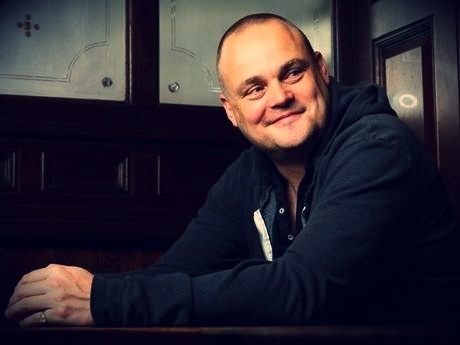
The Accidental Book: Distractions of a Touring Comedian – Interview with Al Murray

The life of a touring comedian is a uniquely pressured and privileged thing; to have tickets bearing your name bought by people who hand to you an evening of their lives, and ask you to fill it with laughter: Hwoo. I have worked and toured with comedians. I should have remembered that to ask them anything when they’re nearing the end of a tour is as likely to invoke a torrent of existential woe as it is a massive yawn. It is certainly naive to whimsically ask them what life is ‘all about’ as an opening gambit.

Al Murray, creator and purveyor of quality pub landlord alter-ego of the same name, gamely replied to my blithe tone, (no doubt as annoying as finding a skidmark in your hotel bed): “What’s what all about? I barely know what day it is any more – we’ve been touring since this time last year pretty much and I feel like I’m living in a great big rolling present with no end in sight. And what’s that all about?”

I thought of other comedians who – though they know they are lucky to be doing it at all – after a long stretch on the road, with homogenised hotels and the quiet inner-mania that comes with hundreds of people expecting you to be at your best every night, inevitably reach the stage when they just want to go home and sleep in their own bed.

I asked Al what helps.

“Good food. And the fact that the audiences are nice: it remains an ongoing daily surprise that people want to come and see me.”

Even after years of playing to packed houses, a state of refreshed disbelief characterises most working comedians. Beneath the skill and success is always the novice receiving his first laugh. (Unless you turn into a total nob. And lordy there’s a few of those about too.)

What does a comedian do at the end of a long tour, once ensconced in the comforts of home? Sleep? Scratch his balls? Al, it would seem, attempted slothdom but failed miserably.

“I’d given myself six weeks off at the start of last year, fully intending to do nothing at all after a year on the road, and a couple of days in I got bored, sat down and started writing some of the ideas that then turned into the book. I got about 35,000 words done, took it to a publisher who then – horror of horrors – wanted me to actually finish the damned thing. Writing is hard because unlike stand up you can’t tweak it night after night, you have to sign off on it and watch it go out into the world to haunt you. Or worse still be completely ignored.”

I doubted it would be ignored, but wondered if success in other realms was a blessing or a curse in a comedian’s literary sidestep.

“It opens doors, but also warps expectation of how a book might perform. But as this book is written from my point of view, not the Pub Landlord’s (like the last 3 books) it at least has the advantage of novelty.”

I pictured Al daintily tapping away at some high spec Apple product, and then – thinking of another writer in his family – imagined it, like a romantic wanker, all falling away into black and white – the screen replaced by quill and ink, as writers of yore would have been tasked to write their tomes. I nudged him to divulge.
“You mean the Thackeray thing: he’s my great great great grandfather. As a youngster all that did was guarantee that I wasn’t going to read his books, which is a shame as Vanity Fair is brilliant. But I never felt a weight of expectation or anything.”

Not many people can boast – nor lament in moments of reduced self-assurance – names of great note in their lineage. Al is neither abashed nor bolstered by it. Even with literary and military history peppering his family, and his own success, he almost swats it away. A reductive instinct perhaps further micro-evidenced by reducing his full name to Al, about as short and fuss-free a name as you can get without being called ‘Oi’. I asked him what’s in a name, if anything.

“I love the idea of nominative determinism – that your name somehow sets your fate. And there can’t be that many plumbers called Tarquin.”

I pondered. Nope. Never had my pipes tended by a Tarquin.

Knowing there must be some level of choice in a constant circuitous touring of the nation’s larger venues, I asked Al what made him keep coming back to Southend.

“The Cliffs is a rarity for doing stand up – it’s a big room where you can hold everyone’s attention. Southend crowds are no-nonsense and one night there was a bloke at the front whose name was Cliff. What else could you ask for?”

Al will be playing the Cliffs Pavilion with his new show The Only Way Is Epic on Saturday 29th & Sunday 30th June. His book – a memoir about his love of history – will be out in the autumn.

20130628-121732.jpg