Nature’s Got Some Moves

6:07am. Ok. So the wall just moved. I am officially awake. Listening to the battering wind outside and blinking. The house is juddering gently, my old wooden bed against the attic wall making the occasional shift. Like jelly on a table at a party as twenty lunatic children roar past high on sugar, setting it a-wibbling. But a bit scarier, when it really quakes. A bit ‘The Exorcist Lite’, like the devil is dry-humping our houses instead of our daughters.

Nature’s got some moves, hasn’t it? We forget that a bit sometimes, living in Blighty. We get a sort of milder-mannered version of everything. Even our rain has a sort of apologetic English quality when it’s pouring. “I’m so terribly sorry about this, chaps. *SOAK* I feel really quite awful about it. *DRENCH* I’m just going to get this last bit out and then we can can all have a cup of tea and crack on. *HAMMER*” Exotic monsoons aren’t like that. There’s no apologies in India or Venezuela; just relentless torrential soaking, rain falling solidly on everything, like Nature has a hundred thousand feet and is kicking off all its shoes at once. Thwack. Water can be so gentle and so soft, and so pummellingly hard. Violent. Unapologetic.

Nature likes the night-time too. It does a lot of its big work at night doesn’t it. Snow, rain, wind. They all seem to prefer shaking their tail feathers in the dark while we sleep before slowing down for the day.

I slept through the hurricane of, when was it, 1987? Did that one have a name? I don’t remember. Woke up to the street looking like God had been playing dominoes. Fence panels all felled through our back gardens by a big finger flick. I don’t believe in God, but when you wake up from a storm and see the mess that’s been left your imagination leaps a bit to God, registering the unexpected scale of it all compared to what you’re accustomed to. We attribute the force somewhere, even if only for the tiniest flickering moment before remembering to credit Nature. Mum couldn’t believe I’d slept through it. For years afterwards she’d joke that I could sleep through anything. We walked to the park the next day and sat on the trees, now lying down flat with broken limbs like Somme soldiers. Dead trees. They were just logs now, not living beasts. I sleep through less now, am woken by more. Is that getting older; not wanting to miss anything? Does the body shrug off its need for sleep because we are not growing anymore? Because we’re adult-sized and our brains instead turn to face the downward slope?

So this is Storm Katie. A lot of hurricanes seem to be named after women. I wonder why. In so many things of this manmade life we are denied force, but in weather we are seen as mighty, and treacherous. I think of one of my oldest friends. Katie. She’s just lost her mum. She must feel like railing like this wind outside. I haven’t seen her yet. Haven’t been able to hold her, like she held me when I lost Dad and everything inside was turned over by a tornado. I hope a piece of my love gets taken to her whipquick on the wind; somehow quicker a messenger than the technology I’ve been typing my condolences out on; more tangible the love than light and pixels.

I’m thinking of that little girl now too. The poor little thing that got whipped away by the wind, not far from here. Playing alone on a bouncy castle. One big tug enough for her to take her away forever. I’m not sure I’ve ever heard a story quite like that, not round here. There must be strange and terribly sad cases like that going on all around the world all the time, little deaths in the great swipes of Nature. But when it’s local it feels bigger. Closer. Crueller. Scale; our feelings respond to scale, and proximity. 

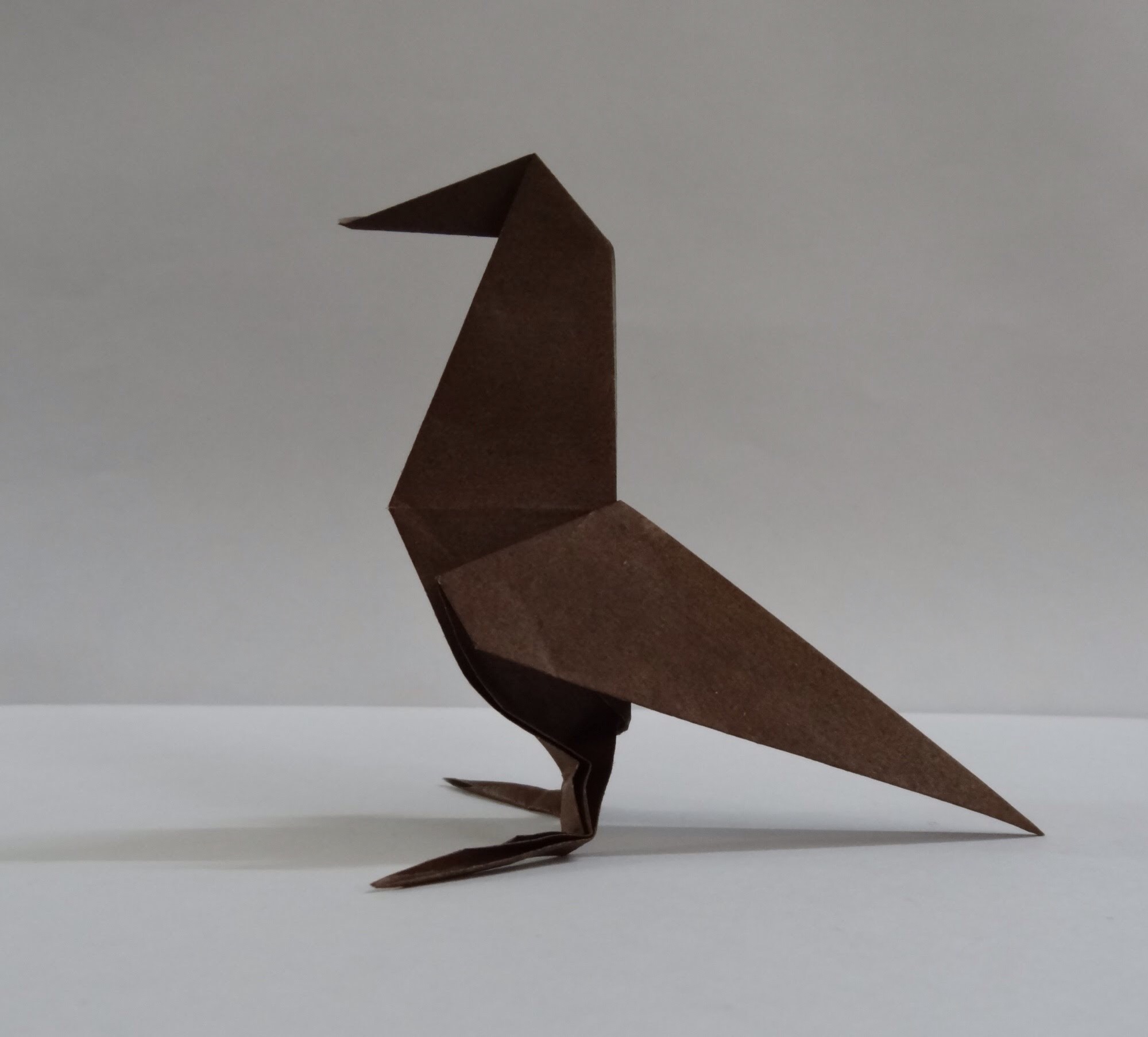
It seems to be dying down a bit outside now. Can’t be too bad because a plane just snuck by overhead. They’re not allowed to fly if it’s too bad, are they. Unless it’s been blown from its runway moorings at the airport and is soaring sans engine like an origami bird.

I might try and get another hour’s sleep if I can.
  

New Girl

Being the new girl is always a tough role. In anything. Even if the job is a peach, something you wanted very badly and are dead proud you got, it’s still tough being the new girl. You know from your first arrival that you are being judged. And it’s not because your new colleagues are hardball meanies fixing you with a laser glare from their all-seeing eyes. They’re nice. They’re not the problem. You’re the problem, to yourself.

It’s because being new and feeling new, you see yourself in a new light, you see everything you do tinged with that ‘newness’, see yourself afresh from their perspective. And it makes you worry you’re a complete lummox. Even though you got the job over lots of other people. Even though everyone is being completely lovely to you. Even though you’re learning what you need to learn. Even though you haven’t burnt the building down or erased all the files on the shared drive or accidentally called someone’s family portrait “hilarious” to be met by stoney silence. Even though you’re already making office jokes and you’re all hooting like sisters and brothers. You still fear you’re a massive idiot.

And you absolutely should. You should think you’re an idiot. You are an idiot. We’re all idiots.
I think it’s perfectly healthy to start a new job clawing at your skin with self-loathing. To reduce yourself to a base starting point and soar slowly and quietly from there. Because who wants to employ someone who comes jogging into the office on Day One like Rocky, punching the air. Who wants someone from Glengarry Glenn Ross shouting can-do phrases into your face? Who really wants someone approaching their desk with a post-it note accompanied by a Beyoncé hair flick and a butt-thrust of At-Tit-Ood? I don’t want that. Do you want that? (Maybe I do want it. Wednesdays get very boring as a rule. Maybe you do need that.)

Anyway. You see what I mean. There is doubt in all corners of being ourselves, and being the new girl or boy is when we are hardest on ourselves because we want to be so awesome at everything, instantly, and we can’t. Because we are new. We go back to our first day at nursery, where we want to suck on a rusk and have an afternoon nap because all this learning is so sleepy-making. To our first day at junior school where we are too afraid to ask to borrow a pencil sharpener. To our first day at senior school where you look up at all the big boys and girls and see them floating along with total self-ease, not knowing that they have lots of doubts coursing through them too. It’s the first day at youth club, or Brownies or Scouts, or Uni. It is when we arrive at something and say to people we don’t know “Hullo. Erm. This is…me.”

We should always be new at something. And there is always something to be new at. That’s a bit exciting isn’t it? Despite the fact we put ourselves through a harrowing psychological obstacle course of our own fashioning, it is still wonderful to be new. To learn new things. To not be top dog but know that hard work makes it possible to get better, to succeed and climb. 

I have got a new job. I love my new job. I love my new colleagues. I love what we do and why. I love the building I work in, and I have made my desk pretty. I know where all the important things are, like the fire exits and the kettle and the stationery. I think I’ll be good at this job, when I’ve learned all the new stuff and got smooth at shifting all the gears. I may even start sashaying around with a Beyoncé butt of power, just to liven up Wednesdays. And for now I am going to try and enjoy the exhilarating discomfort of being new.


YES PLEASE, ARE YOU SURE, ARE YOU MENTAL, I LOVE YOU

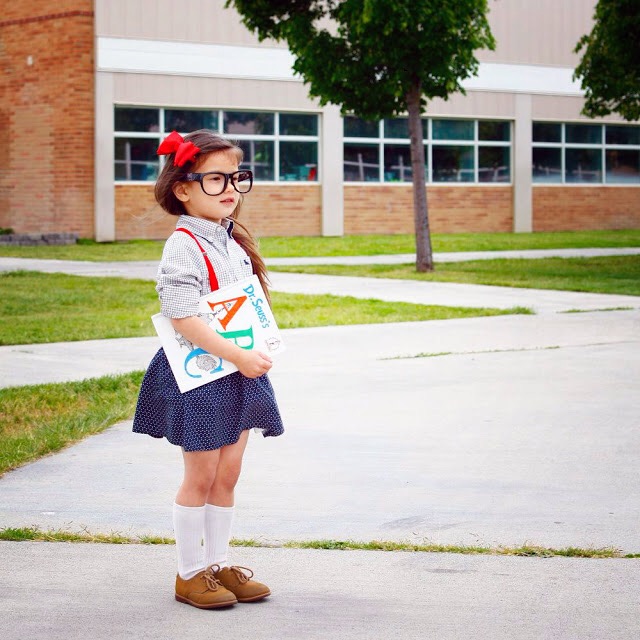
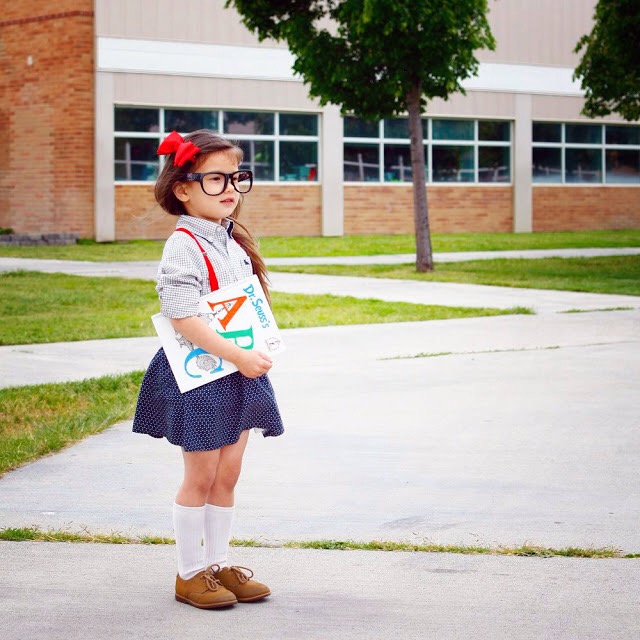
I started my day being sad about not being at my bookshop for World Book Day. I don’t work there anymore, since last week. I got another job. And although I love my new job, not being at the bookshop was like a little thorn in my heart. But I was cheered by seeing my nephew and niece trotting off to school with his Beano (CLASSIC) and her Clever Polly and the Stupid Wolf (NEW CLASSIC) to share with their friends. I thought of their day ahead. It made me smile.

Then I got to my new place of work, which I realised is actually like something out of a book. A big old house in a beautiful park. Approaching it I feel a bit like a governess turning up for her first post, Jane Eyre meeting her Mr Rochester with his mad wife confined to the attic, or an injured highwayman seeking shelter, or a WW1 nurse at an orphanage turned war hospital, or an 19th century solicitor sent to tidy the business of a dead woman, peered down at by the ghost of a woman in black, a rocking horse set to creak his welcome. 

The magic of books is all around us in our surroundings, if we choose to see them. In the trees and houses and paving slabs and ponds. In the furniture and countryside and faces of strangers. Real life things are all would-be mementoes of the things that we have read. We can see what we have read, and what we choose. That is the beauty of fiction. It is ours.

Then I got to work and in the slithers of moments I grabbed instead of a lunch I replied to personal emails that were stressing me out. Business that needed tending. Things I had to hurry when I did not want to hurry them. I got a bit huffy at everyone and myself, at time, and the notion of lunch, and work, and technology for allowing us to keep ploughing on when actually we probably should just step outside and walk around the rose gardens and read bench plaques or laugh at silly dogs. 

Only at the end of the day did I fully realise I had been tending to the correspondence between my literary agent and my publisher, reading and finalising contracts so that in a couple of months time I will find myself holding – a book. My first published book. Of a playscript. That I wrote myself. Then a couple of months after that I will be holding another book, of another play, that I am finishing at the moment. Two books in one year. After thirty five years of producing no books but wanting to. Suddenly World Book Day felt like it had telescopically zoomed in to something very small, unglobal, unimportant to anyone but myself, localised to the most central point – right next to where my love of books lies. Inside me. In my heart. With all the other important stuff of my life, in the hidden unthanked organ that pumps constantly without moaning; that keeps me alive.

I may not be working with books anymore, but this year, on Book Day, I presided over the business between two men; a literary agent, and a publisher. They have spent days, weeks, bouncing back and forth with legal things in my name that I have no understanding of, and have little interest in beyond ‘I love books, can I have my own one now’.

I read their business emails and replied ‘ok’. By which I really meant ‘YES PLEASE, ARE YOU SURE, ARE YOU MENTAL, I LOVE YOU’.
And I dare to dare to dare to say it, I felt very happy. 


Punk Me Up

I’ve always thought I am the opposite of punk. On the whole I’m very well behaved and seldom question authority for fear of offending or stirring up trouble. I’m like a Labrador that is rarely naughty unless you leave a lamb bone lying around unattended. I suppose most of us who were brought up in households with average levels of parental discipline are pretty similar, just getting on with things, being well behaved humans. As I’ve got older I’ve become a bit more outspoken, and less likely to put up with stuff that disgruntles me. Mean people, awkward situations, slow restaurants, bad shows, rudeness, people wasting my time or taking me for granted. I can be more easily provoked to be critical now than ever before. But on the whole I am very unpunk. I care about what people think, I think. Maybe that is why I have been drawn to writing a play about it. To let myself off the leash.

I decided that Punk would be the theme for my new play last year, and it was only in January that I discovered it was a fortuitous choice that coincided with the forty year anniversary of punk. 

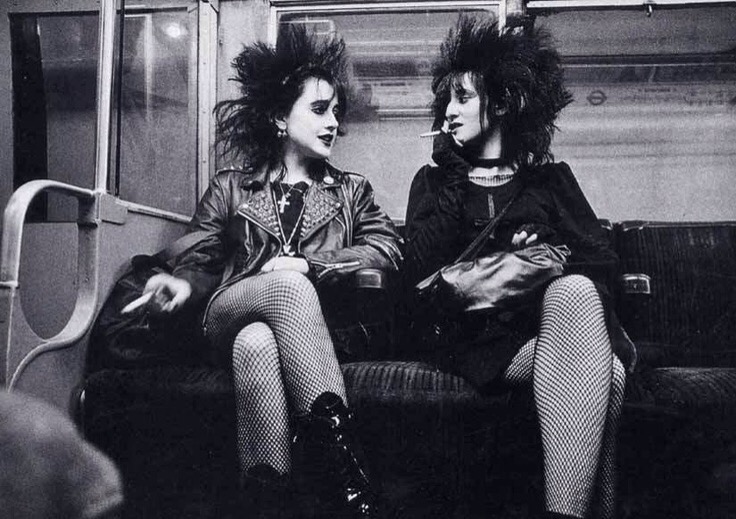
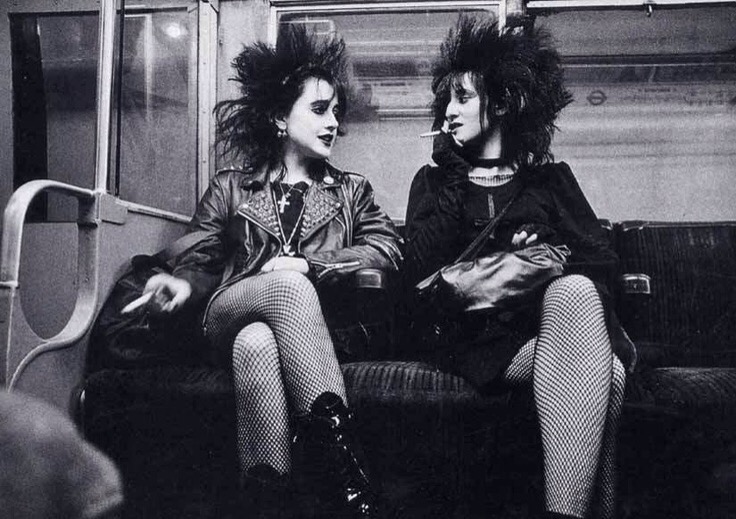
Through my research of a period I was not alive for, I’ve become more aware of quite what a different world it was for women to be in back then. I’ve been looking at the fashion and the attitudes and think it must have been a massive time of liberation for women who all of a sudden could overthrow the constraints of accepted female behaviour; who could stick two fingers up at the consensus of what makes us feminine. They could be rude, they could be aggressive, they could be openly dissatisfied. This was the next stage on from the miniskirts of the 60s. There was a self-empowerment; an almost sexless pride in scanty clothes, in the slashed t-shirts and the fishnets, in the leather and studs. The dog collars didn’t say that the women could be led, but rather “don’t come too close, we might bite”. Female punks have since said they felt included by men, and not sexualised. For all the flagship rude behaviour of the movement, the famous swearing and the anarchy, the fighting and the spitting, they were respected. The brashness of it all countered women’s usual position of being objectified; the ethos was anti-typical, in sex and style and outlook. It’s an inspiring thing to research. It’s made me consider whether it was the last great rebellion of women before this latest wave of feminism.

When I come to think of it, maybe all of us are a little bit punk in spirit. Punk doesn’t have to be about music or fashion, it can be that little spark of rebellion we’re all capable of. Like, I bet some of you do the odd spurt of 35 in a 30MPH zone. I bet some of you leave work a little early if you can get away with it, or throw a sickie, or wear novelty pants under a serious suit because the secrecy of it makes you smile. Some of you might even be the kind of punk who picks up your dog’s poo then flings the bag in a tree like some kind of year-round faecal Christmas decoration. (To be honest, I think I’d rather you pogoed in my front garden with a can of Stella then headbutted the postman.)

If living in world where it is essential to stay critical so that we may play a part in how it is shaped, do we actually owe it to ourselves to be a little punk?


Little Bug

One of the best things about a bookshop is the people which flit in and out. It’s been one of my favourite things working there over the years; watching people. It may seem like browsing is one of the dullest things ever to witness, but it isn’t. I don’t mean the ‘coming in from the rain’ browsing, or the “I’ve forgotten if du Maurier’s under D or M” (*abashed literate chuckle*) browsing, or the blank-brained browsing of people who dare to ask where Non-Fiction is (“Which particular ‘bit’ of Non-Fiction, you cretin?”, we never say, but want to). 

But true browsing, when you catch that rare moment of someone’s blankness – not in a stupid way – but a ‘being open to anything’ way. Clean white page people. Grazing the shelves with the thing children feel in the guppy-mouthed moments that come just a split second before wonder. The wonder bit before wonder – so small it’s almost nothing, but so great the possibility of it washing over you. True browsers go with it and almost don’t see the books anymore. Rubbish browsers read blurbs and think it’s just a book with one story. And put the books back in the wrong sodding place. 

True browsing, with the mind, can achieve an almost transcendental quality. True browsers can levitate around a bookshop and exit without even realising they’ve been in. True browsers can traverse time and space and science and regret. True browsers can forget. Browsing is almost Buddhist. Where does the browser’s mind go? If they’re doing it right they don’t know. It’s almost more apt that these tinkers almost never buy anything, because they couldn’t choose from it all, because they almost weren’t there.

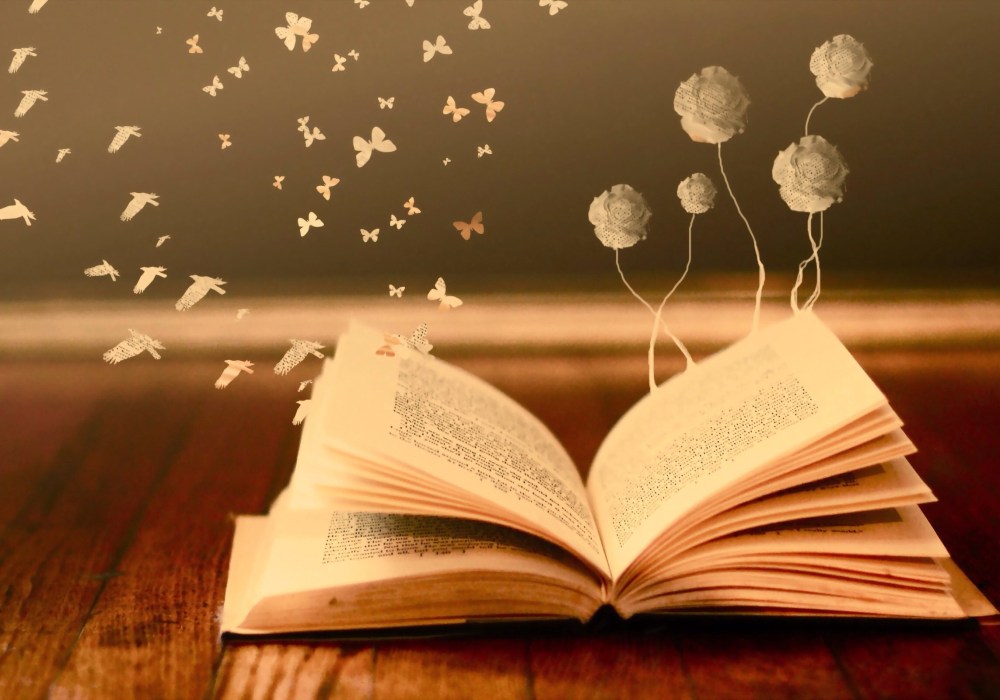
There are words in all those books, you know. Sleeping words, which spring awake when you open the pages. Thousands of words in thousands of books, which means millions of words, which is officially a lot. I’ve stayed at the shop for almost a decade for those words. For all the ideas I will never grasp, and questions I’ll probably never think to ask. For all the hard work that other people have put into stuff. For the comfort in knowing that better people have done all this living for us. For the comfort of knowing some things (like love) last, and some things (like slavery, and the Spice Girls) pass. For all the wonderful things I will never find time to do, for all the things it will never occur to me to think about, like fishing and flying and finding mushrooms in your garden and furniture and philosophy and frogs and being found and fog and freedom and finance. And Fleetwood Mac. And that’s just the Fs (and one Ph). It is all in there. And what isn’t can be ordered, if you have the ISBN – and do bring the ISBN because we don’t want to do too much work, because we booksellers have very important things to do – like drink tea, draw on windows, and read Danielle Steele passages in a Polish accent to each other while wearing hats made from elastic bands.

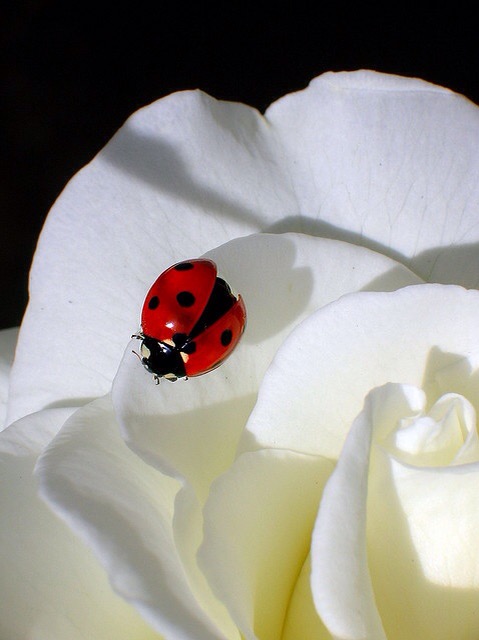
I have always felt like a tiny bug that crawled into the centre of a rosebud, being in my bookshop.

That’s why leaving it will be hard. I expect I will feel very sad and uncertain and a bit scared. But I will also feel that strange uplift of air you feel around you, the sense of possibility, of newness, of future, of the blank white pages of life, when you open your wings to fly.
  

Girl in the Window

Had to do a Valentines window at the bookshop today. There’s a strange feeling when in the window doing stuff. Isolation and quiet, but on display. Naked but wrapped. Perhaps it’s the Amsterdam hooker effect. People project their stuff on you but it’s a sort of harmless distanced thing. Physical presence minus the matter. Sex without the sex. Image without the substance. I don’t know. Anyway.

Normally when I’m in the window, people usually stroll on by without much of a glance. Occasionally a friend will come and bang and gurn at me to make me laugh, or boys will leer, but on the whole I feel invisible. I like it.

Only once a year is the display dedicated largely to a feeling and not an event, a calendar moment or a heralded new book. I mean, in theory, all the events are supposed to be about love, but this is the big boy. Valentine’s Day. The day that eclipses all other events, if not with the queried importance of its sainted origin, but by its sheer application to every living person with a heart. It is a versatile day; by its very nature it should not exclude anyone. And it’s angled outwardly, to everyone, even if people choose not to embrace or even notice it. Other events are much more angled and specific. A mum is a mum, a dad is a Dad, Jesus is Jesus. But love is so multifarious and undefinable and unique and spreads its web over the world, can be loud or secret, or girl-boy boy-boy girl-girl, young, old, the start of something new, the tail-end of something long, it can be firey and flicky like a dragon’s tail or sedate and solid like old bedrock.  
I was making a window for Love. And it couldn’t just be a window for what I think Love is, right now. It had to be for everyone, for every kind, for every time. Basically, my art skills were never going to be up to the job.

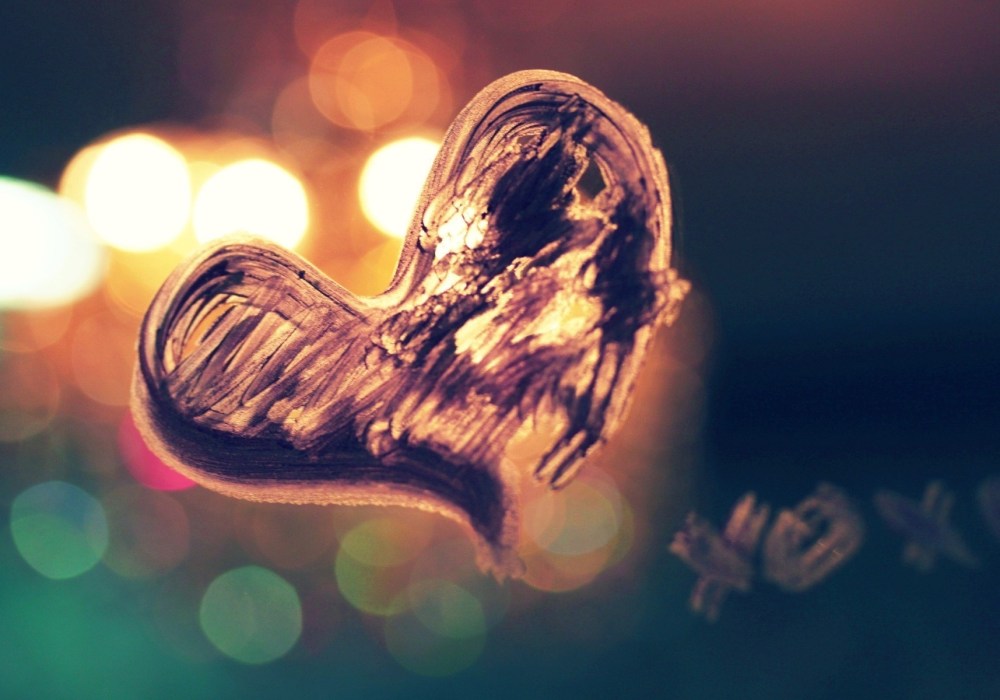
Now, I felt disgusted with myself for falling automatically onto the accepted colours of Valentines, red and pink and white – the conditioned little girl in me maybe – so I added more colour, all that my box of chalk pens could allow, which turned into a tip of the hat to the rainbow facets of the multisexuality of us messy sexy creatures, and it got pretty messy, and my hands got messier, and as I became more and more aware that I had no future as an artist and was making a real hash of it – finger-vomiting out an asymmetrical heart that made me giggle more with each artless stroke yet bristle with OCD anxiety – just as I was about to wipe it all clean and start again, a man came up and stood in front of me. He stood, inches away, reading the words. Not registering me. I was invisible. My vision refocused to meet his eyes and I smiled at him and waited for him to realise there was an actual person behind the glass. A girl in the window. Hullo. The Amsterdam affect. Then he saw me. I waved. He smiled. He pointed to a smudged bit of pen. I intimated “Alright mate, Jesus” with my eyes and laughed, in mime, acting behind glass. He left. 

As I tidied up my tragic attempts at romantic-corporate nauseating whimsy-art, other people came up to me in the window and either smiled or nodded or just read the words. Old gents doffed their hats. Young women smiled, young men half-smiled and set their faces straight, old couples waved cheerily as though to reassure me that love was worth it in the end. The glass almost took on the gauze of the confessional. For a split second these strangers, the ones that stopped, could let a little glimmer of their thoughts about love out to someone who could not really see them and certainly could not judge them. The window became a mirror: they saw not me, but themselves.

A bit later, after skulking around with a series of nods and smiles, an Albanian street cleaner with a litter-picker came in to pluck up receipts and tissues that had been blown in the doorway by the sea wind. He swiftly directed smalltalk to the big matters, like all satisfying mysterious Europeans do. He said there were three core things in life – money, petrol, and women. And though I rankled at the disgraceful reductiveness of this, I could see his point. This old man who had once managed over 100 people in a brick factory and now swept our streets, who had travelled from his sunny country 18 years ago to learn English, because that was ‘what mattered’. He sweeps the streets of this estuary town so he can conjugate our verbs better so that we might ignore him a little less when he comes in our shops to talk to us. Money, petrol, and women. These were his things. What are mine? There are things we work for in this life. There are things we boil everything down to; years fall into the boiling. Money, petrol, and women. Those are his things. We talked. He said he loved the interaction in this country, the language, but he did not like the weather. He said he particularly liked the women. He looked at me, smiled a smile that might once have been devastating in his days of wooing, and left. Him and his old tan. The memory of a former skin, old colour. His past. I felt seen, but unseen. Just ‘a woman’. I allowed him that. (Women do that a lot.)

Anyway.

My words on the window were trite, thought up in a hurry. I was for a morning just a wally in a window with a chalk pen who has no real feelings for the bullshit of the 14th of February, but I was allowed a window of sight into people that I’m normally privy to. People came up to the window and they interacted. Strangers shared their instinctive responses to the notion that ‘i love you’ is the most important thing we can say. I wish it had been possible to do a time lapse video of them all. It would have been a beautiful thing, but I’ll just have to keep it in my mind. People are drawn to Love. Whatever our current relationships with people, whether they pass, change, or endure, we always have an ongoing relationship with Love. I love people, and people love people, and people love love, and that’s all really.
  

The Unwinnable Game Of Getting It Right

It’s really hard to make the most of time, isn’t it? The moment you embrace the belief that it is something to cherish and not squander, life becomes an unwinnable game of getting it right. And how do you get time right when it’s such an ungraspable thing? We can’t see it or touch it, we can’t slow it down or stop it, we can’t turn it backwards, and more often than not we fail in making it work best for us. 

If time had a physical presence would we be any better with it? If at the beginning of our life we were apportioned our time in chunks of matter that we could attribute value to, would we spend it better? Five chunks of time might go to helping a lady down some steps, twenty chunks of time might go to helping a friend move house, or seventy five thousand chunks of time might go into doing your hair so the man you like might notice you. If we could lay our hands on time, if we could see our stores dwindling, could gauge when we were about to run out, would we be any better with it?

I constantly fret about my time; I feel guilty if I slack off or slow down. I don’t often let myself rest. As I grow older I resent people who waste my time. I don’t dawdle as much, I mooch and mosey less, and I calculate the best possible way of getting somewhere quicker, or the time I would have to leave to get somewhere so I can make the most of whatever I’m doing first. I leave as late as possible. I am not an early bird. I see earlyness as a thief of my time. I’m not always sure if this is a terribly healthy attitude to have towards time. I think it means I get myself stirred up when I could just relax. I focus on definite things rather than pass by all those slow moments of just sitting still and thinking and being, without any agenda or schedule. Perhaps it’s just age that encourages this in me: I certainly wasn’t this driven when I was in my teens and twenties. Perhaps it’s losing people and hurting and healing and trying to grab at all of life like it’s my last week on the planet. Perhaps it’s a mixture of it all.

I had two days in London this week. I’d booked some meetings in and thought it would be a shame to not take the opportunity of meeting up with some friends I hadn’t seen for a while. So I booked myself up chockablock with nice things. For two days I had double lunches with friends, tea, cake, gin, business meetings, museums, cocktails, dinner, and two trips to the theatre. I felt on a high from the rushing, from the productive meetings which laid out the rest of my creative year in delicious blocks, and from the lovely pockets of time I had with my friends. I felt like I had truly made the most of those two days in a way that even in my most determined days I rarely achieve, that I had wrung them of all worth and value, had made the most of that unquantifiably valuable true treasure of ours, time.

And then of course I was also pooped and ready to lie down for two days straight. Which of course gave me the guilts, lambasting myself for having a dip in energy, and promising myself that I would stop being such a wastrel, right after this nap.
  

Love Lasers

We didn’t always get along, my sister and I. For starters she stole my parrot. I was two years old, had almost just died from some life-threatening kidney thing, and there she was. Monopolising my mum. Who the fuck was she? I don’t remember feeling rejected or displaced. I just remember the parrot. It was red and blue and on a hoop, and there I was, standing in the doorway with my Dad and a bunch of bananas, handing a really cool parrot to a weird little wrinkly thing that couldn’t even talk. What a loser.

From then on I put down the disgruntled act and slowly learned to love this little creature, my sister. I was told so many things about what having a sister meant, what being a sister meant. It was all just theory. We shucked the rules and found our own ground of fighting and playing and learning how to live together. Some days it was more of one than the other. We switched modes like ninjas with Swiss Army knives. We were nothing if not varied. In battle she was a snitchy little sneak quick to play the victim and I was an upfront oaf who didn’t mind getting caught clumping her. But in our nicer moments we were tight as one of our mum’s French plaits. We always shared a sick sense of humour, grown darker now with age like wine into port, and we laughed most at the dinner table, when we sat in front of each other and were supposed to be sensible. It was our place of equality. We sat eye to eye and laughed. I don’t remember ever being at odds in those mealtime quarters. Only partners in fun. All our peace was made there over mum’s dinners. Our giggles still sound the same years later because they were forged together, then. Sister sounds.

At night, from the top bunk, I’d do shadow puppet shows on the ceiling for her, my fingers contorting into strange creatures, no matter how hard we had fought in the day. Silly little gestures then were the easiest and only way to admit I loved her.

As we grew older I grew more ferocious over this little creature who rankled and delighted me. Quieter than I, with a more cautious approach to making friends, she began coming to me with playground complaints. When she so much as implied someone was making her unhappy, I would round the corner from juniors to infants, past the crickets stumps painted on the brickwork, past the old milkfloat climbing frame, to the terrorist in her life. I would grab them, walk them to a wall, fix them to it, and make it known that if they dared to a blight her life in any way I would end them. I knew, very young, what it felt like to be willing to kill for someone, and it has never left me. Later it grew to accommodate the protectiveness that sprung from losing our father, and the automatic unconditional love I have for her partner, my brother, and their two children. I have the ferocity of all the world’s beasts in my heart for her and them.

Our closeness varied over our teens and twenties. We went to different high schools, we had different friends and interests. But in the late 90s our Dad bought two flats in our names, mortgages wangled with God knows what financial sorcery, and we lived next door to each other. 

We hadn’t wanted to live that close; we’d wanted to feel like big girls, properly independent, but Dad had insisted. He was boss. It didn’t take long for us to be glad of it. We’d cook together, bake cakes, call for pizzas at sluttish times of the day (01702 391333 – the number’s still in my head). We used to knock on the walls to say hi when we were apart. I’d turn my music off whenever I could hear hers lilting in through the window. Just to feel her near. Pottering. Happy.

We both got jobs in Yates’s Wine Lodge and spent shifts together giggling and drinking our tips on the job. We became young women together. I kept one keen eagle’s eye on her the whole time and saw off any predatory dicks. One wrong move from anyone and I would have frogmarched them out by their balls, and probably kept their sacks in my hand after I’d kicked their arses down the street for good measure. I was always on duty.

Then our Dad died. I remember watching her face when we heard the news, wanting to take it all myself so she could be spared the pain. Days later I watched her pelt tins of soup across Dad’s kitchen as she let out her rage at what he’d done to himself. All I could do was watch her, helpless, my grief quieter, caught in the compulsive trailing for clues. The blood, the blades, the pills, the rope. What else. His life’s contents. The notes. Suicide leaves so many questions. We dealt with them differently. We were cleft in two by our differing responses while at the same time fused even tighter at the core. Since he’s been gone I know in my gut that we will never argue. Any sisterly annoyance we might ever feel is eclipsed by what he did. Nothing matters more than the love we have. It lasers every petty thing to cinders.

I’m staying with her at the moment while I ponder where to move. It’s been lovely, living in the same quarters again. We watch rom-coms and paint our nails together. We leave each other notes and snacks, buy each other little things we think will make the other smile. We make peppermint tea and listen to music when the kids are at school. In the evening we put the kids to bed, raucous and silly, read them to sleep, then spending time talking and laughing in the lounge. I could never have predicted the gargantuan love the vessel that is my small finite one-person’s heart would easily expand to holding for her children; the thing she most wants to protect. I am her ready army in all things. As the kids sleep my auntie costume drops off the original truth beneath; I am her big sister. And once I close my door at night, I fall asleep smiling. My love for her has a real tangible outlet while I’m here.

I’ve realised what a rare luxury this brief interlude is. How often do grown sisters get to live together again after childhood? It is a period of grace. It’s almost a mutual forgiveness of the past as we hum to songs and wait for our tea to cool. We are together and have been changed by everything but we are still together. I’ve determined to make the most of this time before I move on. I enrolled us on a six week art course. She has talent she needs to explore and push. I don’t, but I’ll happily sit next to her, being shit. And I am leaving my beautiful bookshop and my job is being diverted to her. It’s a good time for her to work now the kids are at school. She needs something for herself. As I pass this bit of my life to her, less blithely than the hand-me-downs of our childhood, I hope it will make her as happy as it’s made me. I hope it fires her brain and bolsters her confidence. She might not need my protection, but it will find its way out in other ways. 

That is my job for life.
  

I Love You, Houmous – or – Veganuary: My Milder Thoughts

So I haven’t eaten meat or drunk animal milk for a while, but January was the month where I went quite a lot further. I did Veganuary. Some say it sounds like a complaint you’d go to a lady doctor about. I can see their point, I choose not to linger on it. But it’s not an uncomfortable stirring in the down belows. No. It’s where you go vegan, ie give up anything that derives from anything that ever came out of or off of an animal. Meat, milk, eggs, honey, the whole shebang.

I’ve not been massively vocal about it. I’ve not included it in my articles, tweets or posts. I’ve chatted about it to friends, but mostly only those who are also vegan, talking quietly in a huddle about recipes like we fear we might get punched if we dare go above a whisper. I’ve mentioned the odd thing to a few other friends who I know aren’t bothered hearing about it even though they’re meat eaters. Other than that I’ve just been being quietly vegan, for the simple reason that I just… want to. It’s made me feel really bad for vegans for all the stick and questions and scoffing judgement they get all the time. And it’s made me feel bad for meat-eaters that they couldn’t see how wonderful being vegan feels; that eating doesn’t undergo total taste deprivation, and though there are challenges and habits to be broken, it is a wholly fulfilling experience and not a pain-wrought sacrifice that will blight your life forevermore. But most of all it’s made me feel bad for the animals, because they don’t get to choose anything in their lives at all. I’ve reached the point where I can’t sanction their misery. I don’t want any part in it. 

There have been embarrassing moments along the way. Like when I shouted “I can’t have yoghurt! I’m not eating dairy for January! Probably forever!” across the pub after they offered me raita instead of mango chutney. I turned to see my friend was shaking his head at me. 

“What?” I said, with that natural bristle you adopt when you become ‘a dirty vegan’.

“That is the most middle class thing I’ve ever heard you say”, he said. 

I felt instantly ashamed. And then I thought “What’s class got to do with it?” Is eating/not eating meat and dairy a class thing? Is it the great collected walking swathe of general assumptions – the middle class, whatever that is – that are driving this change in eating habits alone, and essentially by sheer economics affecting a blow to a previously unchallenged industry? Do I even count myself as middle class? What am I? I haven’t got two beans to rub together. (Though if I did at least I could probably make a nice vegan dip.)

Here is a brief rundown of stuff I have thought, felt, gone through during this time of reform. In no particular order.

Animals are cool. Wouldn’t it be great if they all had nice lives, just like the ones we think we humans deserve, as our basic right?

Man, I want a burger.

BUT I’M NOT GOING TO HAVE ONE.

I fucking love you, houmous. I love you so, so much. Let’s get married and make little chickpea babies.

There’s milk powder in this?! What? Why is there milk powder in this? It’s a carrot. Who is putting milk powder in the carrots?

By Christ I could neck five tonnes of cheese right now.

BUT I’M NOT GOING TO.

This is quite hard.

This is really easy.

I like this.

People suck.

I miss mayonnaise.

Poor coconuts. They must be so exhausted at the moment.

Aw. Look at that nice viral video of a cow dancing when someone sets it free on a nice open farm. I didn’t know cows could dance. I’m so glad it’s not being pumped full of hormones and milked in cramped conditions 24-7 anymore. None of the women I know would like that. Nor would they like their babies to be taken away against their will. Nor would they like to be inauthentically made to have a constant cycle of periods so their eggs can be turned into cake.

I am really glad that I did this.

Mostly I felt that. ‘I’m really glad I did this.’

So I’ll keep doing it.


The Importance of Not Disappearing

When I started doing less acting work in favour of writing, I started to feel a real sense of victory that as a writer you can turn up to a meeting looking a bit like you haven’t bothered. Acting wasn’t like that; it was all “Do your nails, Sadie”, “Brush your hair, Sadie”, “Sadie, make sure you’re not wearing your bed leggings.” As a writer, you can mostly look like a right state. In fact, the scuzzier you look, the cleverer they will assume you are. If I stopped brushing my hair altogether – something I’m probably only two years away from – and started wearing things like corduroy jackets with ketchup rorschaching down the lapel, and glasses so smeary it’s like I’m peering at the world from another dimension, they would probably think I was a goddamn genius. I’d have to keep my mouth clamped shut so they didn’t twig I was a twit, but if I flung some crumbs in my fringe and swilled some cheap red wine like it was Listerine before I went in to a meeting, they might place a modest bet on me winning the Booker in the next ten years.

I like to imagine by the time I’m fifty, if I really junk up my look and scrub up my writing, I could be a mute drunk borderline vagrant, pushing all of the major literary awards around in a shopping trolley. It’s a nice dream. Like world peace, or the death of white male privilege. Or hula-hooping drunk on a white beach with Judi Dench.

It becomes easier as the years tick by to imagine a time when appearance means less and less. Maybe even the day when I enter into a self-nullifying zone on the outskirts of zen enlightenment. Where I almost don’t exist as a physical thing, just thoughts in a happy bubblesack. And yet. And yet there are things that make me think “Wait. Pause this nonsense. You have a body. Own it before it’s too late.”
I did a photoshoot with a friend recently. But instead of being the awkward idiot needing to swig rum to loosen up in front of the camera, I was behind it.

We’d rocked up to a studio in Camden to try and get some shots for her podcast with another comedian and for her new show poster. She said encouraging things like “I think you’ve got the eye, Sadie.” And I said “I’ve got two eyes, Deborah, but I’m not sure either of them are it.” I felt the need to instantly tell the proprietors of the studio that I was a moron who had no idea what she was doing, so they wouldn’t watch me pretending the lens cap was a monacle and think “that girl couldn’t find her way out of an open door” and they would be semi right. Sometimes I miss doors and walk into windows. I like to think it’s just respectful to the hard work of window cleaners.

There’s something almost luxurious about forgetting you exist and just watching other people. I think that’s why I like writing. You recede behind a line and watch and see what happens. And it’s easy to watch your friends. Deborah is a beautiful woman, and I got to see her go from awkward to businesslike to demure to strong independent woman to outright sexbomb, warming her way up through the gears to the levels of optimum sass, combining a physical awareness for what makes a good shot with a liberating casting-off of care; a dream combo in being photographed I can imagine. And it was wonderful, to see my friend unfolding like a flower. We spent time figuring out which clothes made her and Sofie feel ‘the right combination of strong and feminine’, sadly acknowledging that traditionally they’re seen as mutually exclusive qualities. We talked about what kind of provocative and sexy images were actually just reductive, counter-productive, and plain naff. The shots of Deborah and Sofie weren’t just hot as hell to look at, they were empowering for all three of us, right there, in that studio, women together exploring what made us feel brave and happy to be seen.

I loved being that side of the camera far more than all the times that I’ve had to try and ‘find the right face’ myself, and though it didn’t make me want to re-appraise my newfound love of being the unobserved, it made me appreciate the importance of learning how to be visible, as a woman. It really would be a shame if we let the prioritisation of our physical selves dwindle to nil. After all, we fight to keep our inner bodies alive through illness, so why not fight to make the most of our aesthetic assets too. To celebrate what we’ve got while we’ve still got it. Life, and beauty. Interior, exterior. The whole woman. Women have to fight harder to love our older selves, much of the male-led world makes it hard; it seems a shame to bow out of feeling fabulous too early. Letting people see us is a beautiful thing in itself. It lets the people who love us enjoy us more. I may feel instinctively more comfortable writing than acting, photographing than being photographed, but I have promised myself to try never to believe that physical self-abnegation is a key to a happier life. We exist. We are here. Be seen.


Award-winning writer-comedians Deborah Frances-White and Sofie Hagen can be heard being utterly awesome in their smash podcast The Guilty Feminist, featuring Shappi Khorsandi (Ep 1) & Emma Kennedy (Ep 2),
 here.