Kissing Jesus

I’ve always sort of fancied Jesus. I don’t think it’s so much the fact he could probably get his Dad to pull some strings for you and get that fine waived for picking flowers from the roundabout shrubbery, or even the water to wine trick, but the fact he’s just a bit…elusive. Like Doctor Who, or Patrick Swayze in Ghost. He’s not really there, mainly coz he’s dead. That’s fit. I don’t think he’d be offended by that.

Jesus started flirting with me when I was about 13, I guess. I went to an American-style Christian jamboree in the park with some friends, lured mainly by the size of the big top style tent. I thought there might be lions and clowns and acrobats, but it was actually Kriss Akabusi bouncing around with a microphone. Despite this, I had fun. I heard a lot about Jesus. It was pretty Jesus-themed on the whole. Christians dig him.

When I got home I hid in the potting shed for a bit because I hadn’t told my mum I was going to an evangelical circus and I thought it might be safer if she thought I’d run away or been abducted or murdered. When I finally ventured in, she was more unsettled by the truth: I had been singing along to Christian soft-rock. I think she thought Kriss Akabusi had spiked my lemonade and done a Lycra voodoo conversion dance in my face. I fell in line and scoffed at religion to reassure her, but inside something had shifted. It was the first time I had been moved to tears by the story of Jesus. I had felt the emotion of a tent of hundreds of people who believed he was the son of the dude who made bird’s wings and bee’s knees, and rather than laughing I was moved. It doesn’t matter that I hadn’t believed the core tenets, merely that I had listened, contemplated, and felt something, for and with people.

I felt closer to Jesus after that. I noticed him around more. Churchyards, postcards given out by precociously polite young men in suits on my doorstep, framed iridescent pictures of him doing a two-fingered healing salute to some lambs in Oxfam. He was sort of everywhere, and I liked him.

Around the same sort of age as the brief introduction to happy-clapping, I read To Kill A Mockingbird and thought Atticus Finch was the best man ever created in the whole of literature. It didn’t matter that he was a character of fiction, it mattered that the story struck important notes deep within me, notes of love, tolerance, kindness, justice, and morality. I cried for Jesus, I cried for Atticus. I have cried for lots of men, real and unreal. Woody from Toy Story probably wins the award for Most Mascara Sadie Has Wasted Over An Imaginary Being. I’ve sploshed my eyeball essence around quite liberally if I’m honest. But if crying over stories about made-up men was a foolish thing to do, if emotional reactions to them weren’t good for humans somehow, fiction would have ceased to exist a long time ago. We have enough true stories to keep us moved, inspired and entertained. But we choose to invest ourselves just as devotedly in fiction as we do in truth. We need it. We wouldn’t know what to do without it. And the blurred lines between the two is enough to keep us fired up for millennia, in all sorts of ways.

I fell out of the thrall of Christmas for about a decade. In my disenchantment with it I even wondered if it was a more honest state for an atheist: borderline Scroogedom; the grumpiness of non-belief. It was dull. Not believing anything can be quite dull. But now I’m back, and ready to get back on the happy wagon.

I realise now, in coming back to Christmas after a few years of just going through the motions of it, that I am also returning to something else. In my not feeling festive, I was shutting out things, and thus wallowing in myself with my own concerns, which is essentially selfish. Coming back to Christmas means coming back to people, and that’s always a good thing.

Jesus looks pretty hot for 2013 years old. I will think of him tomorrow on his birthday in between mince pies, I will hum my favourite carol Oh Holy Night, and I will think of what he means to others, before I eat another mince pie. It doesn’t matter if I don’t believe, it doesn’t matter if it’s just a story – if a story makes you feel things, it’s a pretty good story, right?

No matter how much I don’t believe in him, I’ll always sort of want him to drop by one day, give me a wink and confound my dull science. Plus, I bet he’s a really good kisser.

20130111-073910.jpg

Love & Christmas: The Cath Kidston Trap

I’ve spent weeks laughing at people churning themselves into a frenzy over Christmas shopping. “Calm down dears, it’s only November”, I scoffed internally at the harried mums jabbing me in the bum with rolls of wrapping paper that have been cynically bolstering the tills like coiled harbingers of January’s pennilessness. There I’ve been – smugly tutting for weeks like I’d somehow escaped The System – until I realised with a gulp that it’s now…actually…well, pretty close. Like, a week away. And I’ve done next to nothing.

I should have learned by now to plan ahead and do it in manageable chunks, but to be honest this last minute panic is as much a Christmas tradition for me as doubling my podge and weeping in the street at the Salvation Army band. “You’re old and wearing a really big coat and playing the tuba – HAVE SOME SNOT!”

It’s an amazing pressure that swirls around us as this time of enforced happiness. Aside from the emotional obligation you feel to the nostalgia of Christmasses past, to being the same festive person you’ve always been when actually you’re mostly stressed and distracted, you also have to think about other people; family, humanity, maybe even – dare I venture – Jesus. Christmas is demanding – you have to buy stuff, wrap stuff, plan stuff, eat stuff, juggle stuff, do stuff, eat stuff, think of stuff, be stuff, eat stuff, sing stuff, wear stuff, stuff stuff, eat more stuff, and stuff. It’s like work, (if work encouraged you to always have a fortifying mulled wine in hand).

One of the hardest bits is buying stuff for people that doesn’t leave their faces looking like you just handed them a kipper on a frisbee. No one wants to see that face. You want to see the face like you just gave them a winning lottery ticket wrapped in Michael Buble’s best pants. You want the good face. You want to make those tinkers feel loved. (And, secretly, a silly little part of you wants to make them love you the most.)

But the pressure’s on, and you’re squeezing through a throng of people who are seemingly buying the best presents ever, and they’re smiling smugly at you as you dither with a battery-operated meerkat, and your brain, panicking, turns to anything else but the logic that tells you: “Your family love you, they want you to save your money so you can fix your car and not be stressing in the new year – they want to just spend time with you.”
No. The spending of Time isn’t pretty enough. You can’t put Time in a box and make people cry with it.

So naturally, I fell into the Cath Kidston trap. I wanted to spoil my sister rotten and so I found myself in a squished boutique, stylish women cooing in my ear that Cath Kidston is the best thing to happen to Britain since Hitler killed himself, and frantically thrusting my debit card into a cashier’s hand because…I want my sister to know I love her. I want her to know I am always here, that my heart is still charged by all the power in my blood which rushed me like a pre-pubescent warrior towards her doomed bullies in the playground, that I think she has the prettiest face I have ever seen on a real live woman, that I think her vegetable lasagne is the best.

So I bought her a floral bag.

And even though I know she will love it because it’s bloody gorgeous (she’d better not fucking read this or the surprise is ruined), a small part of me was disappointed in myself. Because Cath Kidston bothers me a bit. Not because she’s now astoundingly rich or is turning pretty designs and nice craft ideas into generic badges of proscribed femininity, not because she’s cynically seized upon that quiet, comfy, increasingly shameful part of most women that wants to be baking and feathering and making everything ‘nice’, not because she would probably not be seen dead out in something as common as her own designs (the ones that make it into the shops anyway), but because she is going against the whole ethos behind her floral/birdy/polka-dotty loveliness. She’s the queen of twee; the figurehead for the renaissance of vintage thrift, and the Cath Kidston empire which lures us with its shabby-chic ‘I’ve just macraméd the hair I pulled out of the plughole into a charming brooch’ is a facade. It’s not hand-woven in an English country cottage by Cath herself – no, it’s made in China. It’s about as English as Chairman Mao slurping noodles with a panda. It’s made in massive quantities to be shipped out to shops which make people feel like they’re buying into an authentic experience, or expressing some aspirational or creative part of themselves not being otherwise satisfied. Cath Kidston, and all her pricey ilk, is the opposite of tepid tea and stale jam tarts at jumble sales in honour of post-war ‘make do and mend’. Cath Kidston is sort of the new Burberry; ethos turncoat and brand flake. The symbols of qualities we admire and covet – domestic contentedness, resourceful canniness, attractive living – are made available to everyone not out of good spirit, but out of the voracity of business. Cath Kidston is not likely (nor would ever have been advised by anyone with a brain) to have limited her wares to the country stores of farmers’ wives in moneyed rural England because they were more honest showrooms for her designs. You’d have to be a fool to wilfully limit your own success.

There is a certain democratisation, I suppose, present in the dispersal of such products in the way a brand can go from exclusive to inclusive, elitist to commonplace (like when the poor could suddenly get their hands on bottom-rung qualities of coffee, spices, chocolate, and the BMW after the rich had grown ambivalent about it all) – but democratisation and class unification is not the mission nor the driving force; boundless cold hard cash is.

Perhaps Cath doesn’t like what it’s become. Perhaps Cath herself is sick of the whole look and is reclining in a minimalist Bauhaus pad somewhere sickeningly urban. Maybe she doesn’t poo in pastel colours after all. Maybe she’d surprise us all by being a messy eater and saying ‘cunt’ a lot. But her ego must be somewhat sated by the knowledge she is an image-maker of her generation, as were Coco Chanel, Mary Quant, and the dude who painted that black woman a bit greeny-blue in the 70s. Cath Kidston’s designs will one day evoke a whole era. Perhaps it will have earned it, perhaps the history of a brand is the history of a people, perhaps what is coursing through its lines and colours is the disparateness of Britain – the haves, the have-nots, the spirit, the laziness, the pride, the nonchalance, the reserve, the gaucheness, the snobbish aspiration, the humble salt of the earth; Britain in all its chequered (gingham) past.

A part of our culture all woven up in a bag for Christmas.

But.

When we were little, and one of us was sick, my sister and I used to take a plate of malt biscuits and a glass of milk to whoever was languishing in bed. I could have reminded her of the infinitesimally huge things I felt for her by spending 59p on a packet of biscuits and arranging them in a heart shape; I could have given her a bit of our time in a box – a tiny malt cow grazing on a golden brown biscuit – and she would have loved it. But I fell into the Christmas buying trap of needing to somehow quantify the immeasurable, and I bought something pretty that I know would make her walk down the street all jaunty. And that jaunt will have a lifetime of my love trailing clumsily behind it. My love is in her fibres.

20121217-230210.jpg

Actors: Portrait of a Showmance

I don’t want to ruin anyone’s convenient perception of actors being self-absorbed needy coxcombs, but I feel I should tell you that some of them can actually be…the opposite of wank. I spent last week recording a BBC series called Walk On The Wild Side (comedy voiceovers to funny footage gleaned from the BBC’s wildlife footage), and I got to work with some of the loveliest dudes in the business. Like, some proper darlings, darlings.

The week got off to a laborious start however after I politely declined a car to pick me up from the station. I always feel funny being driven in a swish black car by a man in a suit – it makes me feel like I’m a colonial slave-owner named Miss Mabel in an undiscovered bootleg Dylan song about privilege and evil, so I usually say no and get the tube – wishing the TV companies would merely issue an Oyster card as one of the perks. Perhaps with a jaunty plastic cover, maximum. But I learnt my lesson this week as I ran late for the first day’s work and got sandwiched between two men on the central line who were both clearly sweating out a decade of bad late night curries right into my face. I sprang out of the carriage at Tottenham Court Road and spent the whole of my trot to Soho trying to keep my oesophagus from bursting out of my nostrils like a serpent of bile and woe. I turned up huffing, puffing, sweaty and stressed, lamenting my ridiculous decision not to have slaves.

Thank goodness the day got easier or it might have become something like work. I read the paper, ate a croissant, Brummied it up as a speed-dating chimp, had some tea, was a penguin for a bit, had some sushi, squealed as a meerkat, and wondered what to have for lunch the next day while having another sit down.

A lot of people take the piddle out of actors being all ‘luvvy’, and that’s because they are. And I think I know why. Because actors get to spend a lot of time sitting. In make-up chairs, in trailers, in studio slob-out areas waiting for their next scene, (and, less illustriously, at home waiting for their agent to call). And when they’re sitting they chat incessantly – at first out of graciousness, then out of curiosity, then out of genuine care for their temporary colleagues. Tot up the hours spent chit-chatting and pretty soon they have shared a lot of stuff – their heritage, their dreams, their eccentricities, the dull details of their domestics. Compound with that the time spent on scenes – the concentrated moments of creating something, and the ‘at ease’ moments in between characterisation where you giggle or muse the process, all the while exposing different glinting shards of something which is you, but not you – all that bonds you quicker than any other initiation period in any other job. Being paid to act is a validation of all your confidences and a reminder of all your insecurities, and an invitation to a thousand unrecognised pulses of the psyche along the way; it’s only natural you should cling to your companions while doing it. By the end of the second day you’re kissing everyone goodbye, calling people darling, and faux-weeping if someone has to leave early. There has been a genuine bond forged in the fires of fleeting creative industry. It’s not Love, but it’s Luv. Or a term I heard only recently – a ‘showmance’.

One of the best things about acting is having the wherewithal to fully embrace just how ludicrous a job it is, and how ludicrous you are for wanting to do it. It is a foolish, childish, unimportant profession compared to 97.3% of others (clinically proven), and if you don’t retain a high level of awareness about it that’s when you’re at risk of turning into one of those total nobs whom everyone hates. Working in comedy in particular, thank fuck, keeps you hyper aware while ‘acting like a dick’ of the pitfalls of actually ‘being a dick’.

Let’s spell this out: I spent a week doing things like gargling water while humming Lady Gaga as a seal, singing Sweet Caroline badly as a bird of paradise, and finding just the right sort of lisp for a simpleton goat. I got driven to and from work, was bought breakfast and lunch, sat around with some lovely funny people, watched Come Dine With Me, and did a few voices in between. Now I’m pretty sure that’s not a proper job. I feel immensely guilty about it actually; I might not let them pay me. In fact, I might pay them.

No matter how peachy that all is, it’s sometimes quite easy to fall into nonchalance about it. Even astronauts must get bored. Even Buzz Aldrin must have huffed at the moon and wished he was at home eating cereal. No matter how grounded or humble actors remain while on a job, how lucky they remember to feel, how aware they are of the fact they might never work again if fortune (or casting director) decides to look them up and down and too-casually say “nah”, how utterly replaceable they are – the simple fact is they are being utterly spoilt in the meantime (in the nice comfy budgets of Tellyland at least) and the sulky teen that resides somewhere in us all is being coaxed to the surface. “These organic digestives are completely devoid of any taste.”, “My driver insisted on talking to me this morning when I was really busy trying to finish a tweet.”, “I can’t believe they forgot my wasabi!”

One afternoon, after a tough five minutes for us actors exploring the dynamic of a shoal of exuberant fish, Jude Law strolled past us in our corridor-cum-teenagers’ pit and reminded me that even though we were spoilt enough to be waiting for Wagamama lunches to be lovingly placed on our laps, we were amoebas next to him. Dirty, ugly, poor ones. He floated through wearing garbs of cloth not spun on this earth, and we all fell silent. I glanced at my script. I was about to play a slightly confused wildebeest. Jude was probably going to re-do a line for a movie in which he played God – but, like, an extra hot version of God, with extra powers – like – hot but edgy award-winning ones. Even while remembering how fun this was, how lucky I am, I felt for one small moment like I would never achieve anything. Because I was not, nor would ever be Jude Law, and not just because I don’t have testicles. The hierarchy present in acting, as in all industries, flexed itself right there in front of me.

But then I remembered it didn’t matter. Because this was all playing. This job is silly. And playing God for Warner Brothers is just as silly as playing an amnesiac goldfish for the BBC, is as silly as playing the back-end of a pantomime horse, is as silly as rushing home from your office job to play an ‘urban’ Puck in bad am-dram Shakespeare, is as silly as playing Doctors & Nurses in a Wendy house. At its truest core, acting has no hierarchy. We are all just children, playing games.

I’ll be back on the tube next week, squished into the armpit of a tramp, trying not to puke, and I’ll try to remember to feel just as lucky as when I’m waiting for sushi, with a car outside to take me back home.

Maybe the tramp will have an Oscar tucked in his coat; forgotten, tarnished, but his.

20121210-103310.jpg

Dear Uncle Joe

Dear Uncle Joe,

Writing a letter to you by way of my column is hopefully the most Jeremy Kyle Show thing I will ever do. I’m constantly confused about the levels of personal reflection that should go into a piece going out to people you don’t know, and I’m not sure I get it right. But…

When I came to visit you recently I was afraid. Of seeing you changed and in pain. You opened the door like the perfect host and pulled back in your wheelchair like you were merely revealing how you’d decorated the hall (in Stanna Stairlift chic). I felt instantly comfortable. Having both your legs amputated after years of shocking diabetes had taken nothing from you that I could see, and I felt no need to make you feel better but to just spend time with you.

I sat beside you as you shifted about, at times leaning forward and placing your hands on the arms of a chair in front like a podium. Few men could make their discomforted adjustments look like they were about to give a great speech. Your cigar smoke wafted like an exotic cake being baked and we talked, and I learned some things about you.

I had always known you were an exceptionally clever man, but I didn’t know you had, scattered in your garage, the boxed-up parts of an economic thesis once branded “dangerous”. I had always known your dry wit crackled like an open fire in any room you graced, but I did not know that you wrote comedy, or that Morecambe and Wise once said if they ever found themselves out of contract with Eddie Braben they would come to you. I had always known you were a religious man, but I did not know that instead of excluding myself from your scholarly discourse because I do not believe in God, I should have been fathoming life with you. I had always known you have a voice with a sibilant whisper like two wise owls conspiring over something brilliant, but I never knew you had so much to say, so profoundly, in so short a time on a sofa.

You are a remarkable man, Uncle Joe.

When I left you, I got home and felt blue. Not pity because you’d lost your legs (you did not need it), but a more selfish thing… All that time when I was in agony after losing Dad, when I physically yearned for a cuddle, for guidance, I could have been sat beside you. You were there all along, the perfect source of the intellectual, spiritual, and physical comfort that I crave from older men because my wonderful, difficult Dad set the bar high and taught me to seek the best things. You, the best of the best, were right there and I was too busy and silly to see it. Perhaps in suffering I was honouring him. Perhaps I had to do it alone.

That night, without any conscious prompting I went online and bought myself some nostalgic Doctor Martens, the irony of buying sturdy boots after an evening in the presence of a double-amputee lost to me til the morning at least. Those boots gave me the most rancid blisters of my life, and resulted in me elastoplasting bra pads to my heels to beat the blasted things into submission. But even the blisters were a gift.

Before I left, I asked you what prayer meant to you. You told me it was any reflection, any thought which reached beyond yourself, the smallest gratitude for a flower, the most desperate cry for help. It could be silent and to no one. You made me want to pray, and so now I pray for you.

You are back in Basildon hospital. After some shocking mistakes worthy of serious investigation, you are now in with a punctured organ, the burns on your thighs from clumsy laser work now faded, your shock at being ignored while crying out that you could ‘feel it’, passed. You are said to be ‘doing very well’. Of course you are. You are strong.

I don’t know when you, or anyone, will go. I hope it is years from now. But when you do go I suspect it will feel to you quite natural, like you are just going into the next room to greet an old friend. I have not wrangled with nor found faith for myself, perhaps I never will, but I have hope (which is kinder than faith) that your god is waiting there for you – knower of all your thoughts, writer of all your stories, with a box of good cigars. And you, being wise, will not be surprised – but merely smile. And settle in, with your legs returned to you, for a ruddy long chat.

With more love than I ever made the opportunity of showing you,

Sadie

20121202-225447.jpg

Lost At The BBC: The Buzzcocks Jazz Ribena Sock-Shuffle

Last week I was introduced to the dubious delights of ‘Jazz Ribena’, which I think involves port and know involves dancing to odd Balkan music in your socks. I was at the end-of-series wrap party for Buzzcocks and the delightful oddities on Phill Jupitus’ ipod had everyone dancing like loons. (Though to be honest we all looked pretty sane next to Noel Fielding, cavorting in a sequinned dress.)

At one point mid-boogie, I realised rather sharply that I was on the verge of bladder-explosion and so went in search of a toilet. Everything at the BBC involves an epic search. That place is a maze – you should be given either sat-nav or a sherpa upon entry. Open a broom cupboard and you’ll probably find a forgotten member of The Bay City Rollers who got lost between his dressing room and the Top of The Pops studio in 1973.

I found a toilet. Being able to read, even after numerous Jazz Ribenas, got me that far. However, after a worryingly long wee – a thunderous affair which left me marvelling at my dam-like pelvic floor muscles (tended to, I suppose by a stoic beaver) – I wasn’t so lucky in finding my way back. I think I took a wrong turn as I first stepped out of the door – the first of so many wrong turns – and there began a little adventure in my socks.

I shuffled down empty corridors of unmarked doors, past strangely abandoned printers, the canteen, green-rooms, dressing rooms. I stood in an empty studio all cloaked in shadows, and in its chill could almost hear the echoes of decades of laughter. I heard a noise that was probably just the clanking of a pipe, and hurried out. Back through the eternal curve of that circular behemoth, eyes dawdling on the framed faces of past and present glory, smiles all stopped still in the turgidity of TV make-up. The optical whip of walking in a constant spiral made them appear as though they were moving as soon as I took my eyes off them; dancing away in some other-worldly ball.

I could easily have panicked, alone in secreted round corners of that building and unaided by logic to find my way back, but instead I felt a bit enchanted by its ghostliness. Even in my tipsy haze I couldn’t help but be respectful of my surroundings – the history held in its walls. I thought about the institution it was, the fact it wouldn’t be there for much longer, the many people that had passed through its halls. I was achingly aware that it is all now tinged by the recent awful stories about it. It seemed a bit haunted by itself.

I came across Gordon the Gopher, who was encased in what looked like bullet-proof glass, and I stopped. Here was my childhood, inlaid in a wall. This little fella for years greeted me when I got in from school. I sat cross-legged on the floor watching his puppeteered moosh chatting to Phillip Schofield while I ate my stinky Space Raiders. Here he was, his mouth still, his little fluffy bum unanimated, his eyes an ungleaming black. I wanted to cuddle him but I thought cracking him out might get me arrested. (Though at least getting chucked out of the building would be better than being signed off as permanently missing, like a lost glove.)

The first time I went to the beeb was on a school trip as part of my GCSE Media course back in the mid 90s. Arriving on a coach at the postcode that I had memorised from Blue Peter competitions thrilled me, and going through the revolving doors into the foyer felt like passing into another hallowed dimension. Us girls, high on Cherry Drops and an endless chant of rude-word Ten Green Bottles, all hoped to spot ‘famous people’ (the word ‘celebrities’ wasn’t common in our vocabularies then). We were vaguely disappointed to only catch a glimpse of, yes, Jimmy Savile. He swaggered through like he owned the place, grinning, and we hoped he might just be the dud start to a much more impressive parade of stars. We would never have suspected that he was anything other than a harmless cheesy old duffer with a cigar. I would never have thought that I would be back in the building years later, with everything changed. I would never have thought that that swagger, that grin, that air of ownership about him, would have so dark a source.

I looked at Gordon and I felt anger. Real rage. About the abuse, about the sordid gatherings, about all the things that went on behind some of these doors. About the sullying of innocence and magic, about the trust and starstruck hope that was manipulated for the whims of an abhorrent clique of powerful movers and shakers. Childhoods, all our childhoods, somehow negated as stupid. We were scoffed at, even the lucky ones of us. We were fools; herded, unimportant, worthy of damage. It could have been any of us, and so is all of us.

I felt rage about the casual way in which some people go around affecting people’s lives. It’s one thing to have dodgy proclivities, to have dubious desires and habits – but to deny, underestimate, or (endlessly worse) completely disregard the effect your actions will have on others is truly evil.

Jimmy Savile didn’t just give in to vile urges. He trampled over people’s souls and changed the way they think of humans and the world forever. He gave them a heritage of mistrust, ugly thoughts, and nightmares for the sake of his own snatched subversive jollies. And his clever evasion of it – his defiance and his cynical-playful half-confessional denials, his twisting of the media which at times half-heartedly came for him – proves beyond a doubt that he knew it was all wrong.

He knew what he was doing was wrong.

That is what is beyond cruelty. He knew, and he chose all that over doing the right and kind – the ‘human‘ – thing. (Which was, if he couldn’t have guaranteed that his abusive urges be controlled, to undergo some very expensive psychological treatment, lock himself away from society, or to kill himself.)

Someone once said to me “If I am in your life, it must be as a good thing”, and for a while they weren’t in my life, and now they are again in a new and healthy capacity. I have always valued the consideration that went into saying that. He might have not cared. He could have stuck around and been a bad thing. But he didn’t. He chose not to affect me. He understood on a primary human level that people’s lives, that my life, is important, and that no one has the right to wilfully taint it. We all leave legacies in everything we do. We must always think of what imprints we will leave – on cherished family, on our friends, even on the chap that runs the corner shop.

The BBC has many legacies, for many people. I have been lost in it a good few times, but never, til now, knowing that for some people its legacies are far darker. There have been other things lost in that building, and it’s so so sad that as I found my way back to the party I wondered if it might take demolition to allow the BBC to move on from it all. Crush these hallowed halls and start afresh. Sad.

I carried on dancing, I drank more Jazz Ribena – but it didn’t taste the same.

20121126-104027.jpg

Dinner Party: This is us. We did this.

I went to a dinner party last week. A French-themed affair which had my friends and I dressed in stripes and wielding onions. I felt chic for once in red lipstick with a jaunty scarf tied around my neck, but was mainly glad of the excuse to eat white bread after so long of being good. To deny the baguette would have been sacrilege, like weeing up the Eiffel Tower. The night was an homage to total gluttony, and descended into loud swearing around the dinner table and lots of drunken posing for photos while Edith Piaf warbled in our ears. It was like Allo Allo if René had spiked everyone’s drinks with crack.

The next morning, while lying in bed and wishing I was dead, I prodded through my phone with bleary eyes for photographic evidence of our casual disgrace. From out of about a hundred vaguely dodgy blurs could be caught the odd grin, some men kissing, empty bottles, and a lot of pouting.

Prostrate in my Bergundy tomb, I giggled to myself at what nobs we all were. Though none of the photos will see the light of day, I numbly mused how nice it is that I captured something of the night, especially when so much was risked to the extremely likely post-wine amnesia. (The men who kissed would undoubtedly have no recollection of it whatsoever.) I have a habit of turning into the self-elected photographer of the evening. There’s something in the distance from things, the capturing of things which appeals to me, the chance for reflection while in the moment, but occasionally I worry that I miss out on actually ‘being there’.

Squinting at the blurry pouted lips, I realised that we looked a bit like ironic versions of some of the girls I teach, who spend their lives peering up at their own camera with uncomfortably taut mouths which resemble panicked monkeys’ bums more than they do a siren’s invitation to pleasure. I always feel like a total mum when they do it. I want to tell them to stop it, that they’re pretty enough, that they don’t need to force their faces into what they’ve been trained by a dubious media to think is alluring.

Then I get over it and think it’s just girls having fun. That they will look back at those photos and most likely marvel at their cheekbones, or be surprised that their skin was never as bad as they thought it was.

It’s such a strange thing we’ve done; turning everyone into photographers. Thanks to the many apps on smartphones which allow even the most cack-handed of people to look like artists, we are capturing more moments than we ever did before. Photos used to take infinite set-up by a man who then scurried under a black sheet, and then it would take an uncomfortably frozen pose to get the most basic of pictures. People would save their pennies to go to a photographic studio in their Sunday best to get a shot of them looking rather dour against a fake window-frame. Group shots always had everyone looking like they were waiting to die of the pox.

As photography improved and got easier, so people became more at ease. The twentieth century moved on quick; from can-can girls caught in the act, to action shots of war, to the 50s, where everyone was snapped in a swimsuit holding a beach ball; it was the law. Like it is now the law for girls to pout. The journey of a people is all there. We have captured our own ‘liberation’ and we safeguard it by constantly moving onto the next stage. We preserve, and move on. Preserve, and move on. A photo is a metaphor for all this. We say “This is us. We did this.”, then do something else. We’re amazing, unlike anything else in nature. Photography expresses our social evolution. It is our proof we were here.

If we continue to ‘loosen’ up, if we think nothing now of pouting or flashing our knickers or giving the V-sign (the non-Churchill kind) to the camera, or of capturing sex and childbirth, whatever will we be free to do in the future? How will we choose to represent ourselves? Will we run out of freedoms? Will they remain freedoms if they just become ordinary? For while the camera captures us, we also remain the masters of hiding. Our numbing pain, our suppressed dreams, our very real but unrequited loves.

What will we look like to the future? Drunkards free to swear around a table, pouting masks of a femininity which has lost its way, people who build prison walls as soon as they smash down others?

Will it be the truth, or do we by our very nature find new ways to evade it?

20121119-130445.jpg

The Angel’s Âme – A Story

A ‘story-script’ written on the theme of ‘Chancing Your Arm’ – performed at Flight of Fancy, part of London Storytelling Festival, Leicester Square Theatre, November 2012.

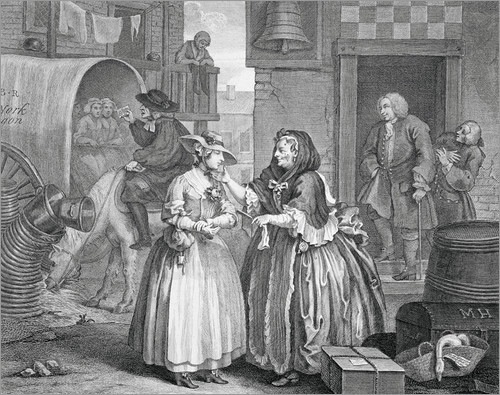
It is not a truth widely known that Madame Clench’s Salon of the Flesh was the most visited attraction in the London of 1826. There was no Georgian equivalent of Time Out to herald it as a hidden gem. It was hidden for a reason, and that reason was decency. Its patrons were furtive, its joys unbugled, its only souvenirs the impish memories in the minds of all who went, and in the case of Frederick Muldoon one life-ruining instance of the clap. But his is not our evening’s story…

It was, for a long time, just your ordinary whorehouse. Ramshackle, perverse, and full of the stench of sex and waste. But Madame Clench had a fancy to grasp out of the muck and onto the petticoats of finery.

MC Stoke me, if all around me ain’t scrubbers and ‘ores. I know I’m in the business of ‘ores, but by christ don’t I tire of just how whorey it all is. You! You are a whore!

Whore Don’t I know it and ain’t I good at it!

MC Your gaudy but thorough milkings of the butcher get me the fattest geese I’ll give you that, but oh how I yearn for more.

Class. A quality she neither had nor could emulate.

Madam Clench, in another life, might have amounted to something more than a crusty-mouthed madam, but class was a cruel parent, and few get over the savage kick in the extremities it doles out at birth. Yet still she dreamed.

She longed for etiquette, silk and love. What she had was coarseness, customised flour sacks, and the grunting of artless men too cowardly to get their cocks dirty at home with their wives.

Then, one day, Madam Clench spotted a chance and she took it.

It was a bright morn, and she was attempting to sashay like a lady through the flower market. She tried her best at it, but she merely looked like she was kicking away hungry spaniels. Just as she was breathing in the succulent boughs of just-burst lilies, she saw a girl and stopped mid-breath.

The girl was an angel, her golden head like a shining halo in the sunlight, her skin like porcelain might have been had it been made by a deity instead of mere men.

She was drawn to the girl like a bee to the brightest of flowers. She knew not how to approach her and instead stood gawping. Then a chance presented itself. The girl turned light as a lilting breeze and a ribbon fell from her hair. Madam Clench stumbled forward and took it up with a victorious shriek.

MC Aaaooh, girl, your ribbon!

GIRL Pardon?

French!

A chance. The chance, though it remained as ineffable as the unsettling aroma wafting aloft from Gunt Picklebot’s cellar. It pulled at her like the glint of a gem in the mud.

MC Oh, poor wretch, look at the state of you – you look lost in the ways of London. Permit me to escort you back to my humble but consoling abode, where I shall tutor you in how not to Die, for it’s certain that’s what you’ll do here, wafting around in your ridiculous innocence. Come on.

And, without quite knowing why, the girl followed her.

After tripping through the rancid gutter shit of the cheery streets, they arrived at the house that was home to anywhere between 2 and 20 whores, depending on the fluctuations in moods and morality. The best whores are the most fickle in all regards.

MC ‘Ere we go. Sit at the table. I have a table you know! I dragged it from Mrs Smythe’s rooms as she lay dying of the pox. So, dearheart, tell Madam Mumsy Clench what the syphilitic spittoon you’re doing here?

GIRL I came to London…for love.

MC You came from France – spouting tit of Romance – to London – the weeping wart on the face of England – for love?

GIRL …Oui.

MC By Christ. You’ll be dead on a barrow within a week.

The girl looked at her, her eyes filling with great big beautiful French tears, and fell on the stolen table. Madam Clench watched the display and tried to reacquaint herself with emotion. Then she caught sight of the girl’s arms, outstretched in hopelessness.

MC Marie Antoinette’s Knicker-drawer! Those arms!

The girl looked up enquiringly at Madam Clench.

GIRL Arms?

MC Yes. Arms. They’re like the dreams of angels caught in wisp-like form, like ivory butter softened by the sun, like giant pearls forged into the celestial boughs of heaven’s trees… You could make a ruddy fortune as an ‘ore you could.

Just then, a ray of sunshine burst through the window with a rudeness that reminded Madam Clench of the time she lanced Tilly Bristow’s boil. Her shudder was disrupted by Revelation. The girl! This exquisite French idiot was her chance! She was her route out of the tedious dire muck!

It was nearing two weeks later that Madam Clench plonked the girl down behind a curtain and smeared her in lanolin.

MC Gives you a nice sheen in the lamplight.

The other whores stood around with venom in their eyes. How was it that this newcomer, this Parisian prude, was attracting so much attention?

MC BECAUSE SHE’S SODDING CELESTIAL, YOU SODDEN-BLOOMERED BINTS!!

…Was how Madam Clench answered their new-sprung fears.

GIRL Madam Clench? Perhaps zis is after all not a good idea? What will men see in the unplucked obedient blonde virgin from Montmartre? I have none of the charm of zese girls.

MC And none of the venereal woes either. Just trust me, my girl. Trust me. You need not any of their sluttish ways – you have something far more valuable. Place your arm out through the curtain, just one lovely bloody arm, and let mystique do the rest.

She stared into the girl’s eyes, as blue as the river Seine had never been, and she felt a shiver run through her. Those eyes were swimming with trust.

GIRL You know, Madam Clench, in France we ‘ave a word zat sounds like ‘arm’…

MC Oh yes, dear?

GIRL Yes. It means, how you say, ‘soul’.

MC Arm?

GIRL Yes – âme. Soul. Heart.

The whores cackled in the doorway.

WHORE Soul she says! She’ll be scrubbing her soul out of her dress along with the souls of half of London’s gentry.

MC Don’t you pay them any mind. You inspire the thought of eternal bliss in the minds of gentleman, then these scrubbers will tend to whatever the men’s wretched anatomy throws up afterwards. And I’ll collect the coins. Be celestial my dear. Be celestial.

And with that Madam Clench pulled the curtain shut and withdrew from the room. She hastened herself to the parlour to attend the first influx of guests, but something did not feel right in her chest – and it wasn’t the hurriedly gobbled pasty stolen from Will Tyker’s stall.

The men soon gathered – they had been hearing of the Angel’s arm hot on the breath of London throughout the past week and were hungry for a sight of it. Madam Clench corralled them in the parlour until they were giddy with lusty promise. She went to pull the lace across the window for privacy, and when she turned around the assembled men had sprung from the room and were halfway up the stairs, their polished boots heavy on the bowing wood. She ran up after them, squeezing herself through the throng to hold them back from the curtain.

They all stood agog, staring at the arm – the soft-sheened protrusion of a faceless girl. It seemed lit by a light that was not of the room. It seemed not of the room itself, not of this world – it had the aura of a fleeting thing, a paused hummingbird’s wing, or a snowflake frozen in the air.

MEN Who is she? Does she not speak? What is your name, girl?

Madam Clench closed her eyes and bit her lip. Her name. She had never asked. She had never thought to ask. She was just Girl.

MC Tell them.

GIRL My name…is Beatrice.

Madam Clench opened her eyes, and steadied herself against the wall. Beatrice. That was her name. She had always loved her name as a girl – thought it surely the name of a lady – but had not used it since she fell into vice. She was doomed to just be Clench, the unloved woman in a thousand dirty laps.

The men wanted more. They clamoured. They stepped towards the curtain, the arm was not enough. They wanted all of her. The pulsing hand of a disgraced earl thrust out to draw it back.

Then, Madam Clench let out such a cry that the whole city seemed stopped for a moment.

The men all turned, their shock worn like gaudy carnival masks. The girl’s arm quivered, still trusting.

MC No! She’s too good for any of you. She has…soul, and I will not chance it for all my life to come.

Something in her voice spiked shame into the hearts of the men. They left. And the memory of that resplendent arm, that briefly upheld sanctity of something pure, stoppered their lust for a good while to come.

Madam Clench pulled back the curtain, looked at the girl who had her eyes shut tight, and took her hand gently.

MC Come on, cherub. You can help me in the kitchen instead. I never got good at peeling spuds. I always ‘ad me chops around a duke, dear.

And something which could so easily have been lost, was not.
20121116-115432.jpg

Four More Years

So, he did it. The cool dude got four more years. He can keep his enamel President badge on his jacket pocket. His fit missus can go ahead with the new Whitehouse carpet, which I like to picture as one big Bill Cosby sweater. His kids can continue to throw jelly at the portraits of stiffs in wigs in the Abraham Lincoln playroom. The morons have receded for a while. It’s all good. Chillax.

Four More Years is the chant that accompanied the Obamas there. It was the thing cried at rallies, at conferences, by people on the street, by people on the campaign wagons, by people watching the footage all around the globe. It was the internal mantra of everyone with a brain who cared about the world: “Please, just, not the Mormon. He looks like George Hamilton and Ted Danson had a fight in a body bag and accidentally morphed. Which would be really cool if he wasn’t a total chump.” The civilised world all squeezed their eyes tight shut and prayed that America would get off the couch and go and vote; to allow their ‘great nation’ to keep moving forwards and not devolve back to the political equivalent of having no opposable thumbs. They did it. They put their Oreos down and went outside, to the polls. Democracy is safe for another fou…

HANG THE EFFING EFF ON!! Obama’s been in power for four years already? Where the Fricklin Delanor Roosevelt did that go? Why are we asking for another four years when the first four aren’t up yet, surely? WHAT IS HAPPENING TO TIME? How casually we flick it off like wooden beads on an abacus into the ether.

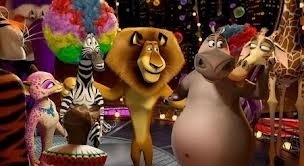
I took my nephew Elliot to see Madagascar 3 in the week. In 3D – I’m no skinflint, I want him to call me Cool Auntie Sadie, and I’m not morally above paying for the title. I didn’t pay for 3D glasses though because it just felt wrong. (Bite me, Odeon. Your prices are disgraceful.) Instead we wore 3D glasses that accidentally fell in my bag last time I was there. (It’s very dark in there, isn’t it?) We were about a third of the way through, and I was running a very rumbustious internal monologue about how Dreamworks’ scriptwriters should go to a Pixar seminar on How To Be Good At It, when I heard a rustling next to me. I remembered I was sitting there next to a little person that I was related to, and I saw that he was loving it. I stopped my cerebral rant and looked at the pretty colours.

I turned to secretly watch Elliot for a bit. He was holding up his head so the way-too-big 3D glasses didn’t slip down the heart-wrenching freckles on his nose. His face was lit up by the screen and his smile was as wide as the sea. He roared with laughter, his nose wrinkling and popping the glasses off the end. He reached for them without taking his eyes off the screen and clumsily prodded them back onto his face. He didn’t want to miss a nanosecond of the magic. In that semi-lit moment I saw the man he would be. He is at that age, where the face starts becoming the face it will be. Elliot is 5. In four more years, he will be 9. Four years after that he will be 13. Then 17, then 21. A man. He will hold the keys to the door. He will drink, and make love to someone, and vote. He will shape his life.

I almost did a little sick-up of Nachos flavoured love and panic. I can accept the quick passing of my own life, I almost look forward to the slipper shuffling of my seventies, the blanket-on-knee cantankerousness which I hope will be shared with someone even more cantankerous than myself. But when I thought of Elliot’s time passing that quickly, when I thought of his life being notched off in chunky increments – old phases ushered out and the new ones hurried in, quad-bundles of time being ticked off like inventoried cargo, four more years: check, tick, gone – I almost stood up in the cinema and wailed at everyone to make it stop. Press pause. Don’t let it go too quickly for him. Let the glasses stay magical and not vari-focal. Let him stay young.

Then a lion and a leopard and a hippo danced to Katy Perry’s Firework and it was all over. I was blubbing like a good un. The film finished, the lights came up. Elliot delivered his considered critique (“That was good.”) and chomped the last Butterkist. And we went home for tea, singing.

20121112-001005.jpg

Breast Man: Lesbian Wedding

When my friend Mandy asked me to be Breast Man at her wedding, I squealed. Then I stopped, confused. A new term. What does it mean, to be…’Breast Man’? I wouldn’t have to get them out would I? Hang on – DO I LOOK LIKE A DUDE WITH BOOBS STUCK ON?? What does it even mean to be married? I’m not sure, having got it wrong already. In and out of it within a year and wondering how it even got that far. I am no model of matrimonial sagacity, but I am pretty sure, as in all things, that Love helps.

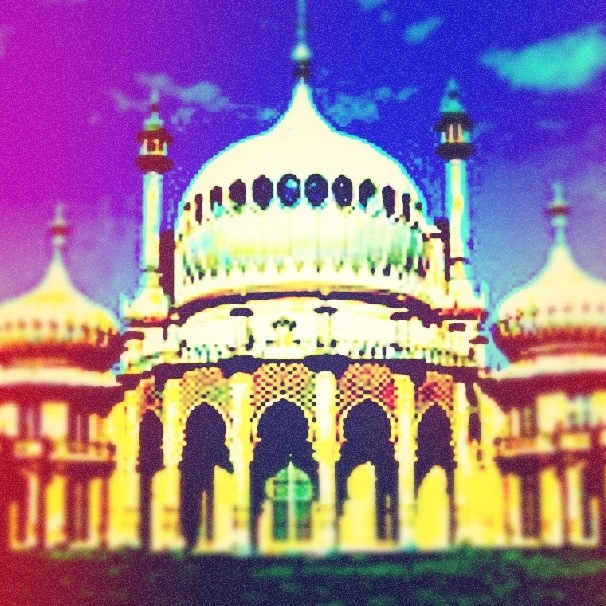
It was one of these nice easy-going weddings where you’re not expected to spend a fortune fitting in with someone’s ‘theme’. It was to take place at Brighton Pavilion, with a low-key reception at something called The Earthship, an eco-joint deep in a nearby country park.

It has always seemed to me that the best weddings are not those which demand things of people, but which inspire them to give something more meaningful; their thought. To me, this was what being Mandy’s Breast Man was; giving thought in the best way I could – nice words. That’s all I had to offer, being so far away during her manic preparations: a speech.

Suddenly, after a year of anticipation, the wedding was upon us and I was bound for Brighton.

The Pavilion glistened in the October sun, and the famous domed turrets seemed like the conical Madonna breasts of a new bride reclining in the grass. I reflected on how amazing it was that we were even here in the first place, celebrating the marriage of two women in love. It’s such a new thing – to have the courage to be openly gay. The culture and vibrancy has been there all the time, but had to be kept secret – or certainly quiet, in corners – and here I was with a bride in a top hat being driven by two glorious homosexuals, one in a chauffeur’s uniform bibbing at traffic and waving like the queen, and one dressed as Baby Spice gone bad. The pavilion was built as a testament to love by a king for his queen, a regency palace of splendour – and here we were squealing outside it really loudly. In fishnets.

The wedding was beautiful. I’ve never seen faces so lit up by love as those of Mandy and Debbie – and naturally those ruddy lesbians made me completely ruin my sodding make-up.

I was bricking it about the speech. I would have read The Owl & The Pussycat or something if the public raping of Edward Lear hadn’t been something I had inwardly screamed at so often at other nuptials. No, I couldn’t maul someone else’s words, I’d have to bleat out my own. And once it was out of the way, and I’d got a high-five from a very straight-speaking drag-queen, I knew I’d done alright. I could relax. The job was done. I could join in the fun going on around me like a saucy carousel.

It’s quite a picture, you know – a lesbian wedding. I’m sure most of the guests this refers to wouldn’t mind me suggesting that they had ’embraced their male side’. That is, the emblematic nods to the traditional male. Short hair, suits, little or no make-up in some cases. This is vaguely misleading, as though there were no lesbians in frocks, or lesbians who didn’t (shock horror) look like lesbians. There were loads of these too, but I find the masculine ones more fascinating.

I was why-curious. Why, if they aren’t attracted to men, are there so many ladies seeking to look like them, in relationships with other ladies who look similar? Is it escape from the perceived weakness of femininity; is it an emulation of power? Is it a revolution against patriarchy by taking ‘maleness’ over and making it their own? Is this, even, just a cultural phase? If open lesbianism is, in terms of freedom, in its infancy – having spent countless centuries as clandestine encounters, love to be ashamed of, only peeking out occasionally from under the covers in permitted sapphic flourishes designed for the titillation of men – are lesbians then just…teething? Chewing on the freedom of it all like a rusk until their adult teeth have formed? Feminists don’t feel the need to wear stiff polo-necks and tut at lipstick anymore. Perhaps lesbians will soften their guard in time too, when it’s all lost that air of brave novelty.

Perhaps I am a naive ignoramus and missing something more subtle. I might have spoken to them about it in more detail had I the nous of a BBC corespondent and not been so rangooned on table wine.

But one thing was clear by the end of the day. That I know what it means to be married. It means whatever you want it to mean. That’s the freedom we have now. Love is free, free is love.

20121105-120241.jpg

Tribute: For Those Who Continue To Rock (I Salute You)

I confess: watching boys strip off their school uniforms and run around topless isn’t usually the way I spend a Friday night. Somewhere past 15 it just stopped feeling de rigeur. In fact it seems like a decidedly dodgy thing to reprise now I’m 32; people get a bit upset about stuff like that nowadays.

And yet, just last week, this is what I found myself doing. Watching a boy stripping off his school uniform and running around like a loony while I giggled behind my hand like an idiot.

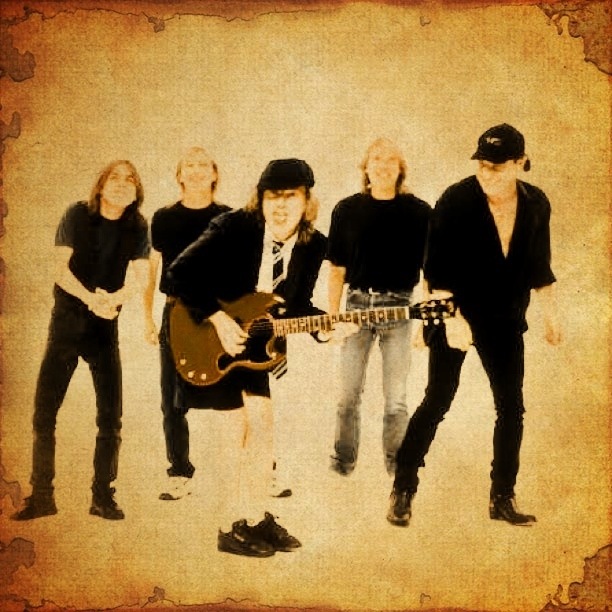
It was Friday night. I found myself, against all my usual discretion, at an AC/DC tribute night. I felt like I’d stepped back in time. I hadn’t been to a gig at that venue since I was a teen – wearing clunky boots, too much eyeliner, and chugging beer like it was Ribena – and here I was half a life later…wearing, er, clunky boots, too much eyeliner, and chugging beer like it was Ribena. Progress. Excellent.

I looked around me. Lots of people seemed to be wearing stuff they might have worn in the 90s too. Some of them looked like they might even be wearing their stuff from the 70s, (and I suspected they’d never stopped). There we stood – some suspended in a time which had never died, and some retrieving time like a pair of favourite old jeans found at the back of the wardrobe. The room smelt like these places usually do – stale carpet, sleepy beer, and the electro-plastic smell of equipment a bit too warm and sparky to pass the next safety test. And men. It stank of men. I think I even caught a whiff of Brute, which span me back to all those clumsy teen kisses that got planted on me like wet socks flung at a laundry basket.

I don’t know much about AC/DC. I know it’s the law for every person with two testicles to wear one of their T-shirts for at least a year of their lives. I know it reminds me of the knobs on the little generator thingy in physics experiments at school. I know there are guitars involved. I did not know an overgrown schoolboy ran around sticking his tongue out like he’d had too many E numbers. Were we supposed to chuck sherbet at him or something? Oh no. That’s just him, being all Rock.

Familiar songs were played. I bobbed dutifully like they were old favourites when really I was thinking “Ohhhhh! THIS is AC/DC!” I chugged Ribena-beer, and beamed up at my happy boyfriend, lost in his own light of a thousand remembered air-guitar solos. “You cute little rock dweeb”, I thought as I patted his bum. I turned and watched everyone else.

These people were lost. Like, properly lost. There was a man in his 50s down the front on his own, diving about in a school uniform. There was a lady in full leather who looked 20 from the back but 60 from the front, power-prodding the air like she’d just won Rock Bingo. There was a man in a wheelchair gliding around the floor as smoothly as a pinball in an old groove. They were lost – and loving it. I couldn’t take my eyes off them. They had paid twelve quid to watch some unknown men pretending to be better-known men.

Why were they here? They could be at home, whacking up the real AC/DC really loud. They could watch old gigs of the real AC/DC on Youtube. They could even catch the real AC/DC in their current line-up, somewhere in the world, and hear those old songs curve a quarter-mile around a stadium, feel the composite power of science and magic making the sound whoosh around thousands of thrashing bodies. Why were they here, while a man named Dougal gyrated in velour on the bar with his tiny boy-nipples? Is this really what it is to pay tribute?

It would be patronising to suppose I could tell what they were all feeling and why. I would no doubt get it wrong. But I saw it as a good thing – that furore of the familiar – standing there in memory of my Doctor Martens and a haze of Brute. We were a clan for the night, like humans are supposed to be. It was, if anything, a tribute to nature, not just the knee-socked gods of rock. It was who we all are: alone, but together, seeking abandonment to something ineffable, higher than the every day job of being us. It doesn’t matter if it’s in a stadium of people the size of pin-pricks, or down your local with a man in velour – it’s all real if it feels real.

And they did ruddy rock.

20121029-102544.jpg